PROTOTYPE-TO-PRODUCTION INJECTION MOLDING
Turn Production-Ready Designs Into Injection Molded Parts
Startup Molding supports hardware startups and product teams that already have CAD, a working prototype, or a near-final design and need a practical path through DFM, tooling, T1 validation, pilot production, and scale-up.
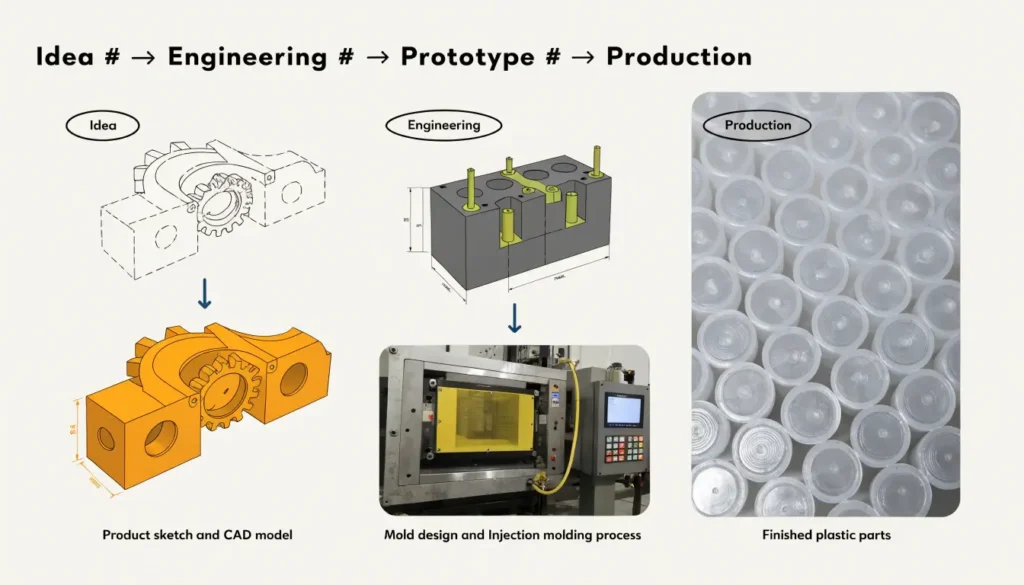
A manufacturing partner for the stage after prototyping
The expensive mistakes in injection molding usually happen before the first tool is cut. We focus on early engineering decisions, clear approval gates, and production planning so your team can validate the part before committing to scale.
For engineering teams
Review moldability, tolerances, material requirements, assembly interfaces, and the risks hidden in a CAD model.
For launch teams
Plan prototype tooling, T1 samples, pilot quantities, packaging, and the transition from validation to repeat orders.
For procurement teams
Receive a clearer RFQ path, defined deliverables, approval points, and questions that affect tooling and part cost.
From file review to repeat production
Choose the support that matches the current risk in your project. The Services hub gives each stage its own scope instead of treating tooling and molding as one undifferentiated quote.
DFM & Moldability Review
Identify geometry, gate, ejection, material, and tooling concerns before release.
Prototype Injection Molding
Validate real molded parts and learn from T1 before production tooling decisions.
Low-Volume Manufacturing
Support initial runs, market validation, bridge production, and controlled design learning.
Mold Design & Manufacturing
Align tool structure, steel, cavities, actions, runner strategy, and approval milestones.
Production Injection Molding
Move an approved process into repeat batches with material and inspection controls.
Insert, Overmolding & Assembly
Coordinate inserts, compatible soft-touch materials, finishing, joining, assembly, and packing.
What makes a project a strong fit
We are best positioned when the project has a defined product purpose and a credible path to molded production—even if the CAD still needs engineering changes.
Strong-fit projects typically include:
- STEP, STP, or another usable 3D model
- A functional requirement that justifies injection molding
- An initial need from roughly 100 to 5,000 parts with possible follow-on production
- A team available to review DFM findings and approve tooling decisions
- Clear target market, quality, assembly, and timing requirements
Manufacturing evidence, not generic sourcing promises
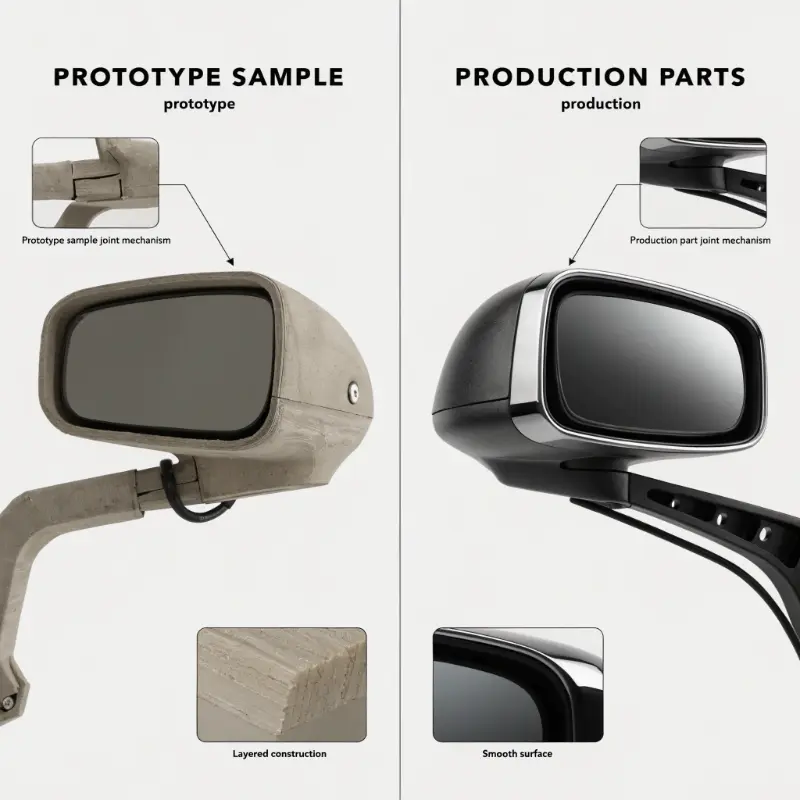
The current media library documents the product-development path, DFM concepts, prototype tooling, molded housings, covers, structural parts, and the transition from prototype samples to production parts. Project-specific evidence can be shared when confidentiality permits.
Frequently Asked Questions
What should I send for an initial review?
A STEP or STP file is the best starting point. Include drawings, material or performance requirements, quantity expectations, target market, assembly needs, and any dimensions that are critical to function.
Can you work from a 3D-printed prototype?
Yes, when the prototype is supported by usable CAD. We review what must change for molding rather than copying additive-manufacturing geometry directly into a tool.
Do I have to order mass-production quantities immediately?
No. Many suitable programs begin with T1 samples or a controlled low-volume run before the tool and process are released for repeat production.
Related Resources
Reviewed by Jerry Zou · Last updated August 28, 2026
Technical recommendations for a live project depend on the submitted revision, exact material grade, quality requirements, quantity, and agreed scope.
Ready to review your molding project?
Send your files and project requirements. We will review the manufacturing path before you commit to tooling.