
Home / Insert Molding & Overmolding
MULTI-MATERIAL PARTS
Insert Molding & Overmolding
Insert molding captures a separate component—often metal—inside molded plastic. Overmolding adds a second material over a substrate. Both require deliberate retention, material, tooling, and process decisions.
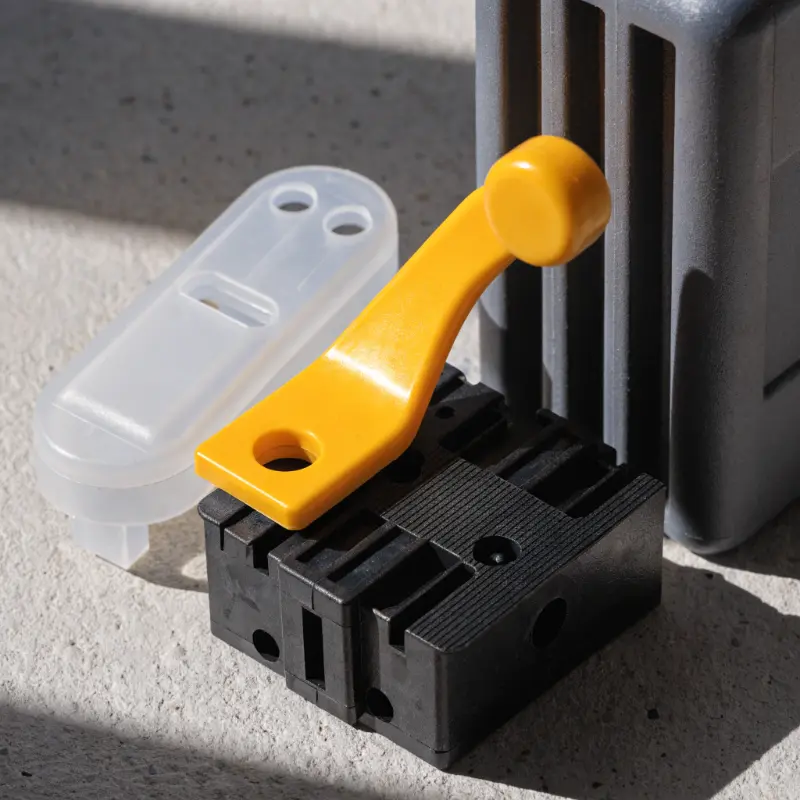
Insert molding applications
- Threaded metal inserts for repeated fastening
- Pins, contacts, bushings, or structural metal components
- Plastic encapsulation around a prepared insert
- Parts that need controlled insert position, pull-out resistance, or torque resistance
Overmolding applications
- TPE or TPU grip and soft-touch areas
- Sealing, cushioning, impact, or ergonomic features
- Two-color or two-material construction where the process is suitable
- Functional bonding or mechanical interlock around a rigid substrate
Design risks to review
Position and movement
The insert must locate consistently and resist movement under injection pressure without damaging the tool or creating flash.
Retention and rotation
Knurls, grooves, holes, flats, and molded geometry are evaluated for the load direction and assembly torque.
Material compatibility
Chemical adhesion, processing temperatures, shrinkage, contamination, moisture, and the need for mechanical interlock must be considered.
Tool and handling
Manual or automated loading, insert detection, shutoffs, part release, and operator safety affect feasibility and cost.
Insert molding vs. overmolding
| Decision | Insert molding | Overmolding |
|---|---|---|
| What is added | A pre-made component is placed in the mold | A second polymer is molded over a substrate |
| Primary risk | Location, retention, flash, or insert damage | Bonding, compatibility, distortion, or delamination |
| Validation focus | Position, torque, pull-out, electrical or mechanical function | Adhesion, feel, seal, appearance, and environmental performance |
Frequently Asked Questions
Can you mold around customer-supplied inserts?
It can be evaluated. Supply quality, tolerances, cleanliness, packaging, traceability, loading method, and responsibility for insert-related scrap must be agreed.
Will every TPE bond to every rigid plastic?
No. Compatibility depends on the exact grades, processing conditions, surface condition, geometry, and required performance. Mechanical interlock may still be needed.
How do you prevent an insert from rotating?
Anti-rotation geometry may include flats, knurls, holes, undercuts, or molded capture features. The design should reflect the actual torque and load direction.
Related Resources
Reviewed by Jerry Zou · Last updated August 28, 2026
Technical recommendations for a live project depend on the submitted revision, exact material grade, quality requirements, quantity, and agreed scope.
Ready to review your molding project?
Send your files and project requirements. We will review the manufacturing path before you commit to tooling.