
Home / Low-Volume Injection Molding
CONTROLLED FIRST PRODUCTION
Low-Volume Injection Molding for 100–5,000 Parts
Low-volume molding helps a product team learn from real production without assuming demand too early. It is suited to pilot builds, market validation, first customer orders, crowdfunding delivery, and bridge production.
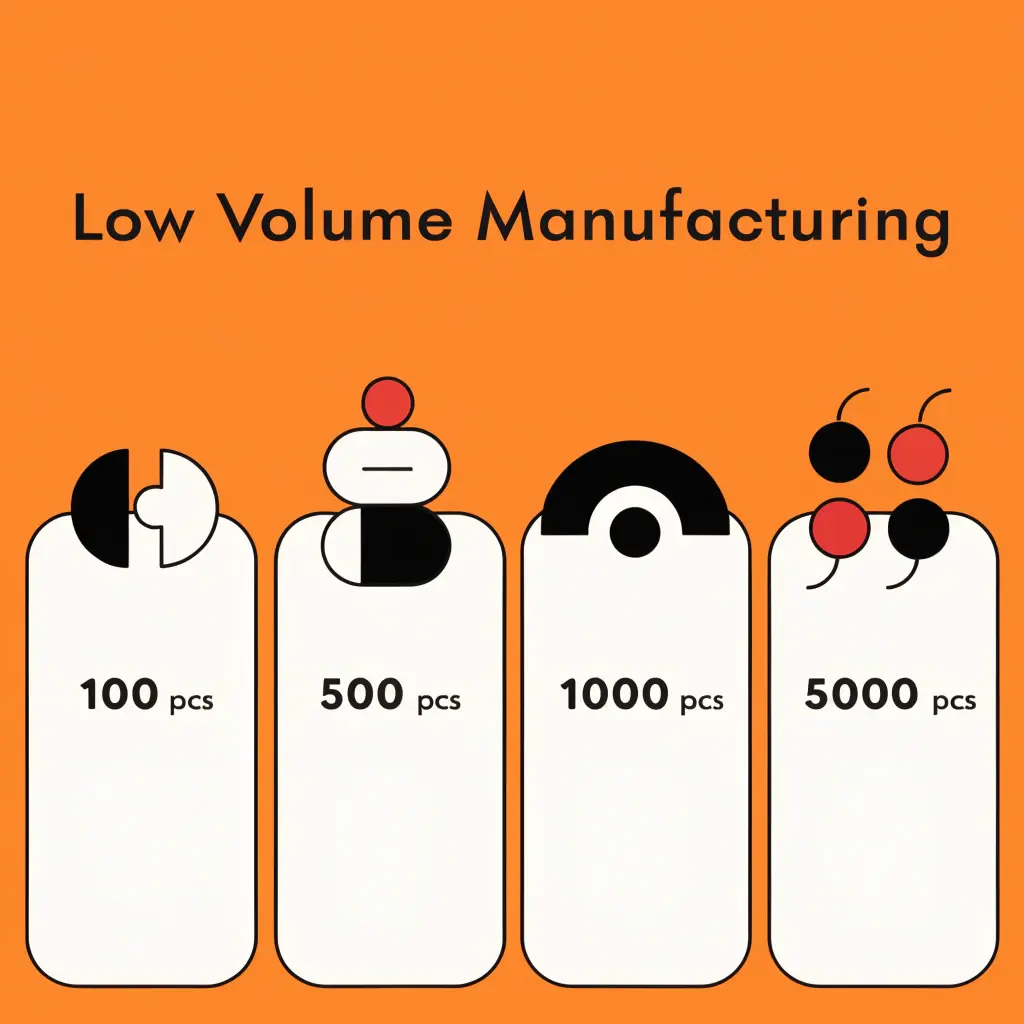
Why batch economics matter
A molded-part price includes more than resin. Setup, machine time, material preparation, purging, color changes, inspection, packing, and the number of acceptable parts are distributed across the batch.
Setup and changeover
Tool installation, process setup, material or color changes, and line clearance have a larger per-part effect on small runs.
Quality controls
First-off approval, in-process checks, traceability, and final inspection must match the risk of the part—not disappear because the batch is small.
Learning objective
A pilot batch should answer defined questions about assembly, field use, packaging, demand, or the production process.
Good uses for low-volume molding
- Engineering verification and controlled product testing
- Kickstarter or crowdfunding fulfillment after design validation
- Market launch before demand supports a larger tool strategy
- Bridge production while production tooling or automation is prepared
- Specialized equipment, laboratory products, and other naturally lower-volume programs
Quality planning for a small run
Define the revision, material, color, cosmetic standard, critical dimensions, sampling plan, assembly checks, packaging, and acceptance authority before the run. Retain approved samples and record exceptions so repeat batches begin from controlled evidence.
When to stay low volume—and when to scale
Stay low volume
Demand is uncertain, the design is still learning, changes are likely, or annual volume does not justify a production-tool investment.
Prepare to scale
Orders are repeating, geometry is stable, scrap and cycle time matter more, and the cost of the current tooling strategy is becoming the constraint.
Frequently Asked Questions
Is 100 parts always the minimum?
No. The practical minimum depends on the part, tool, resin, setup, and inspection scope. Share the quantity you actually need so the quotation can show the right approach.
Can I split one order into several colors?
Possibly, but every material or color change adds setup, purge, traceability, and scrap considerations. List each color and quantity in the RFQ.
Can low-volume production use a family mold?
It can be evaluated, but balancing, part demand, resin, geometry, and unequal rejection risk must be considered before choosing a family tool.
Related Resources
Reviewed by Jerry Zou · Last updated August 28, 2026
Technical recommendations for a live project depend on the submitted revision, exact material grade, quality requirements, quantity, and agreed scope.
Ready to review your molding project?
Send your files and project requirements. We will review the manufacturing path before you commit to tooling.