Home / Prototype Injection Molding
VALIDATE WITH MOLDED PARTS
Prototype Injection Molding for Functional Validation
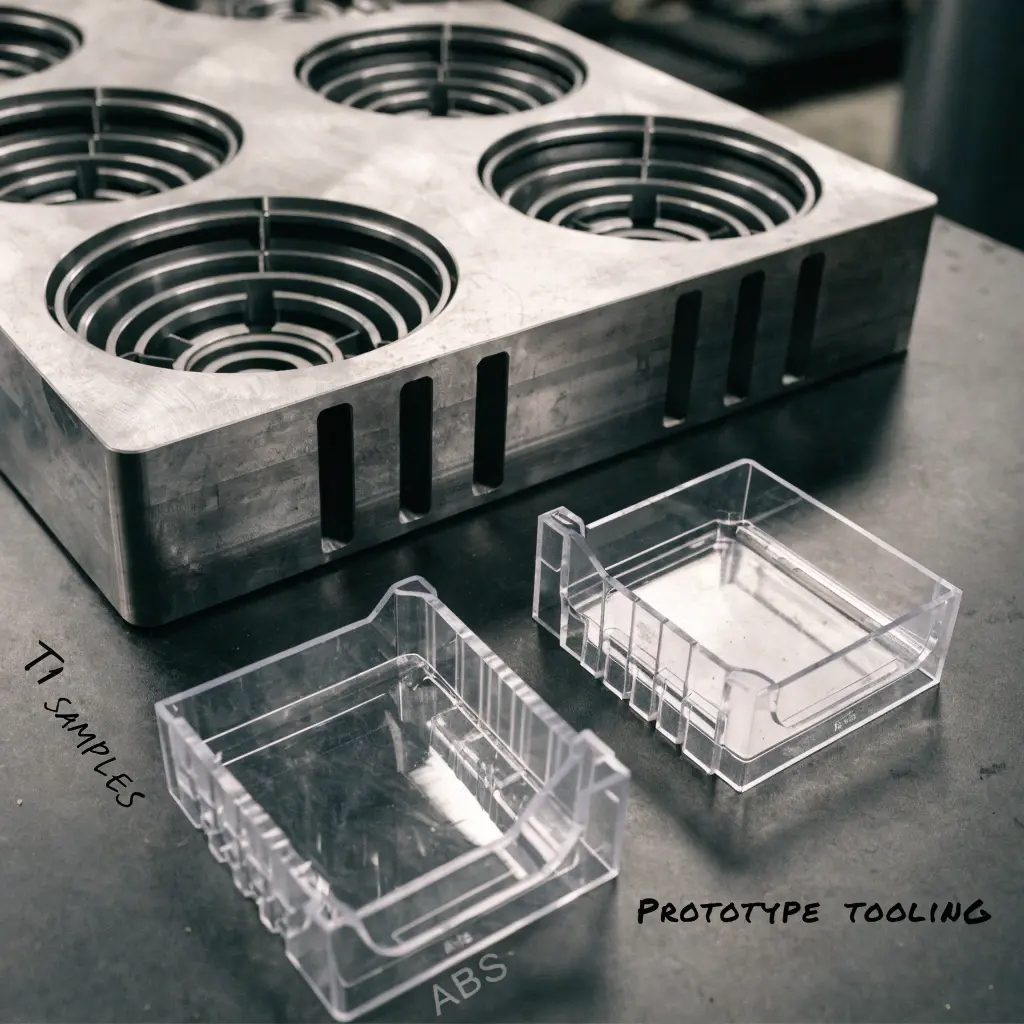
A 3D print can prove form and early function, but it cannot reproduce every material, gate, shrinkage, surface, or assembly behavior of an injection molded part. Prototype tooling creates the next evidence your team needs.
When molded prototypes become useful
Prototype injection molding is most valuable after the product concept works and the team needs to test production-intent material or geometry.
- Functional testing in a specified thermoplastic
- Assembly, fastening, sealing, snap, and fit validation
- T1 review before a larger production commitment
- Pilot builds, demonstrations, field trials, or investor samples
- Learning whether the design is stable enough for production tooling
Prototype tool or production tool?
Prototype tooling
Prioritizes validation and controlled investment when geometry, demand, or the commercial launch is still being proven.
Production tooling
Prioritizes repeat cycles, planned output, maintenance strategy, and the production life required by the approved program.
The decision
Depends on geometry, resin, tolerance, surface, required samples, expected revisions, initial quantity, and the credible production forecast.
T1 is a decision point—not the finish line
T1 samples are checked against the approved design and trial conditions. Your team tests function and assembly; we document manufacturing observations. Corrections can involve process settings, the mold, or the product design. Changes are controlled before the next trial.
Typical quantity logic
There is no universal minimum that is right for every project. Small sample quantities support engineering decisions; larger pilot quantities make sense when the design is stable and the team needs market, packaging, or operational validation. The quotation reflects the actual setup and batch.
What prototype molding does not solve
It does not replace a stable product specification, regulatory planning, or customer testing. It also should not be used to hide unresolved requirements that will force expensive tool changes later.
Frequently Asked Questions
Can prototype tooling use the final production resin?
Often yes, subject to the resin, tool design, process window, and validation objective. Confirm the exact grade and documentation required before quoting.
How many T1 parts will I receive?
The quantity is defined in the quotation because part size, cavity count, resin, trial plan, and inspection requirements all affect what is practical.
Can the prototype tool be used for pilot orders?
Sometimes. The decision depends on the tool material, geometry, revision risk, expected quantity, and the quality requirements for the pilot run.
Related Resources
Reviewed by Jerry Zou · Last updated August 28, 2026
Technical recommendations for a live project depend on the submitted revision, exact material grade, quality requirements, quantity, and agreed scope.
Ready to review your molding project?
Send your files and project requirements. We will review the manufacturing path before you commit to tooling.