
Home / Case Studies
PROJECTS & ENGINEERING EXAMPLES
Injection Molding Projects and Engineering Examples
Customer names, drawings, and program details are often confidential. This page separates facts already supported by the current site from information that has not been cleared for publication.
Anonymized small-batch launch support
The existing Startup Molding site records a project that needed 500 parts for market testing. The published approach combined DFM optimization with prototype tooling, followed by functional injection molded parts for launch.
| Case field | Published information |
|---|---|
| Project background | A startup required 500 parts for market testing |
| Manufacturing challenge | Move from design into molded validation without assuming mass-production demand |
| DFM findings | DFM optimization was part of the approach; specific confidential findings were not published |
| Tooling approach | Prototype tooling |
| Material | Not publicly documented |
| Validation | Functional molded parts were produced for launch |
| Result | Delivery for the launch stage; no unsupported cost or performance claim is added |
Current engineering media
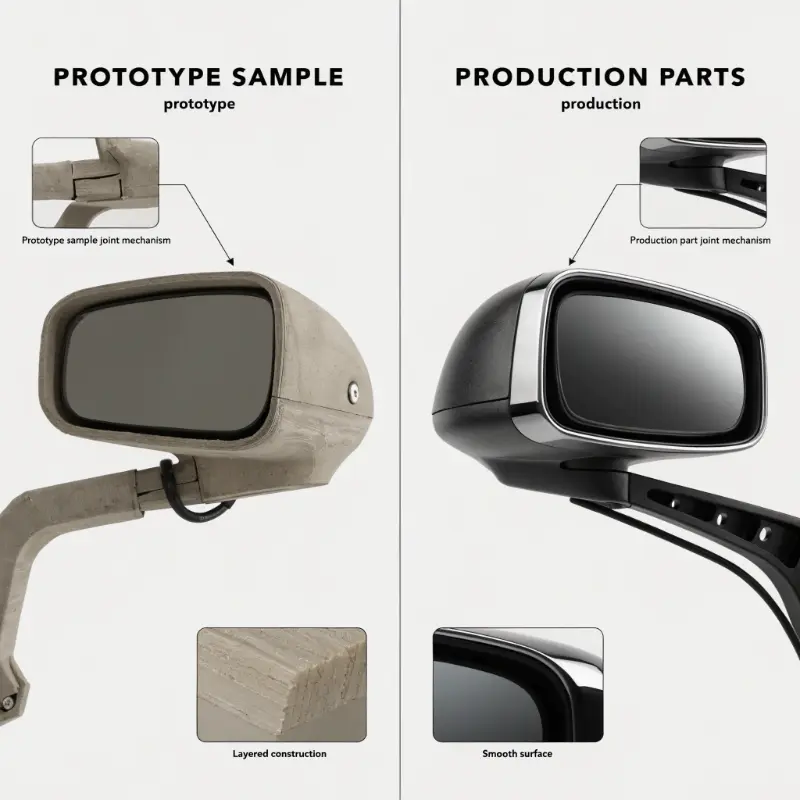
The current media library includes DFM diagrams, prototype tooling, molded housings and covers, structural and functional parts, and a prototype-to-production comparison. These images are used as manufacturing examples only; they are not presented as named-client endorsements.
DFM example
Illustrates wall, rib, boss, and mold-flow considerations reviewed before tooling.
Prototype tool example
Shows the role of a physical tool and molded samples in validation.
Molded part examples
Shows enclosure, cover, structural, transparent, and functional part categories already present in the site media.
What we will not publish
- Customer names or logos without written permission
- Sensitive drawing numbers, CAD views, dimensions, or product roadmaps
- Invented materials, quantities, savings, lead times, tolerances, or test results
- Claims of certifications, awards, or equipment that are not supported by current evidence
How a future case study is approved
A publishable case should identify the approved background, challenge, DFM finding, tooling approach, material, validation method, result, related service, and images with sensitive information removed. The customer or authorized owner must clear any identifying information.
Frequently Asked Questions
Why are most customer names omitted?
Product development and tooling programs commonly involve confidential designs. Anonymous descriptions protect the customer while preserving useful manufacturing context.
Are the media-library images customer endorsements?
No. They are used as process or part examples and do not imply endorsement, ownership of a brand, or a performance result beyond the visible evidence.
Can I request relevant examples during an RFQ?
Yes. Share the geometry, resin, volume, finish, and risk you need to evaluate. We can identify what non-confidential evidence is appropriate to provide.
Related Resources
Reviewed by Jerry Zou · Last updated August 28, 2026
Technical recommendations for a live project depend on the submitted revision, exact material grade, quality requirements, quantity, and agreed scope.
Ready to review your molding project?
Send your files and project requirements. We will review the manufacturing path before you commit to tooling.