
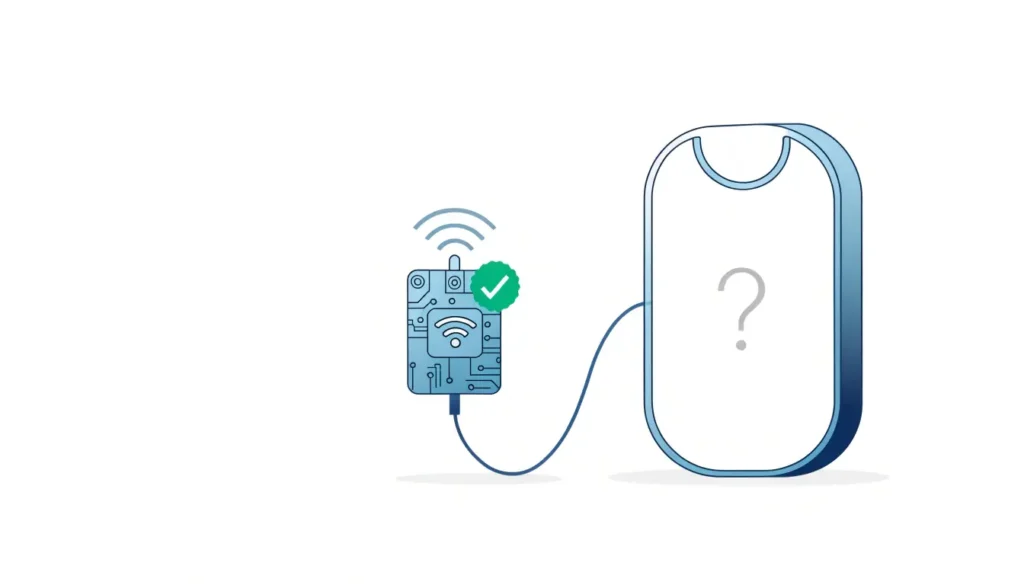
When your supplier tells you that the Wi-Fi module going into your IoT product is already Wi-Fi certified, your natural response is relief. If the module is certified, the finished product is covered as well. That is a reasonable assumption but it is also one of the most common mistakes hardware startups make when preparing a wireless product for market.
However, your finished IoT product is treated as a separate product from the module. What your company still needs to do before selling it depends on your specific product and situation. Just as importantly, Wi-Fi Alliance certification and the legal approvals required to sell a wireless device in any country are two completely different things. Completing one does not mean you have completed the other.
This article explains what Wi-Fi Alliance certification actually is, whether your product needs it, what a certified module genuinely covers, which certification route fits your situation, and what still needs to happen before your product is ready for market.
What Is Wi-Fi Alliance Certification, and What Does It Actually Prove?
The Wi-Fi Alliance® is a global non-profit organization made up of hundreds of technology companies chipset designers, device manufacturers, and network equipment providers working toward one shared goal: making sure Wi-Fi products from different companies work reliably together.
The program it created to achieve this is called Wi-Fi CERTIFIED™, an internationally recognized testing and certification process that has been the wireless industry’s quality benchmark since 2000. More than 85,000 products carry that label today.
What "Wi-Fi CERTIFIED" Actually Means
When a product earns the Wi-Fi CERTIFIED™ label, it means an independent lab has tested it against the Wi-Fi Alliance’s agreed specifications, which are based on the 802.11 standard. Those specifications cover how well the product works with other certified Wi-Fi devices, how secure its connection is, and whether it delivers a consistent experience. Since 2020, all new Wi-Fi CERTIFIED products must also pass WPA3 testing the current security standard that replaced WPA2.
For IoT devices that stay connected to a network for years without manual updates, that security requirement matters considerably more than most founders initially realize.
Beyond security, certification covers multiple generations of Wi-Fi technology. Whether your product uses Wi-Fi 6, Wi-Fi 6E in the 6 GHz band, Wi-Fi 7, or Wi-Fi HaLow for low-power, long-range IoT connectivity, there is a certification program that applies to it.
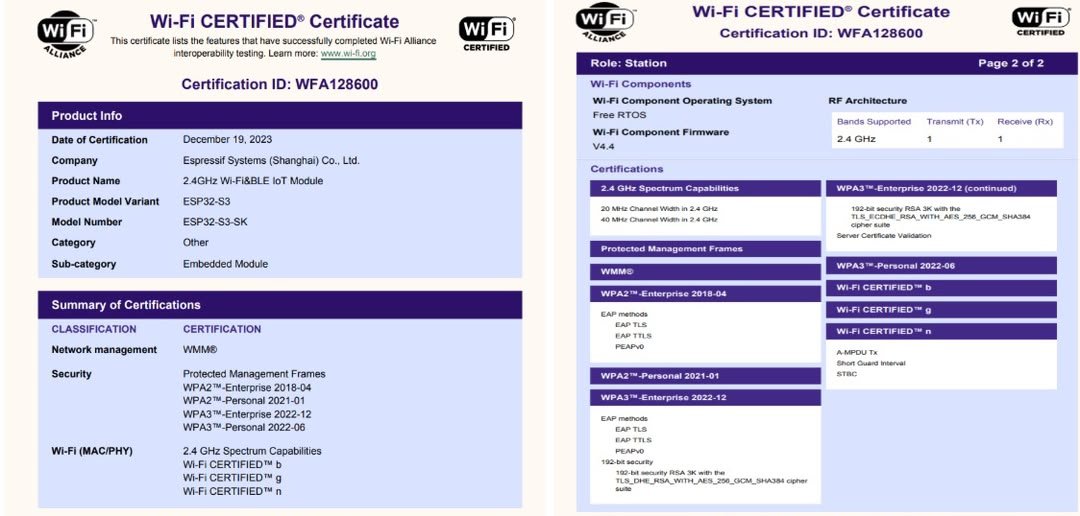
What It Actually Proves About Your Product
A Wi-Fi CERTIFIED label proves that an independent testing lab has verified your hardware product. It shows that the device meets the agreed Wi-Fi standards instead of relying only on the manufacturer’s own claim.
For a startup competing with established hardware brands this difference has real commercial value. Retailers can stock the product with more confidence, enterprise buyers can approve it faster through their procurement process, and customers can trust the product more easily.
What Wi-Fi Alliance Certification Is Not
Wi-Fi Alliance certification is an industry program not a government approval or legal authorization to sell a wireless product anywhere in the world. Completing it does not satisfy FCC requirements in the United States, CE marking obligations in Europe, or ISED rules in Canada. Those are completely separate approvals.
What catches most startups off guard is that a certified Wi-Fi module inside your product does not make your finished product certified. The module’s certification covers that module alone, under the specific conditions under which it was tested, and nothing beyond that.
Does Your IoT Product Actually Need Wi-Fi Alliance Certification?
Now that you understand what Wi-Fi Alliance certification is and what it actually proves, the next question most hardware product founders ask is a practical one: does my specific product actually need it?
The answer is not the same for every Wi-Fi-enabled IoT device. Whether your product needs certification depends entirely on how you plan to sell it, where you plan to sell it, and what claims your company plans to make about the product.
Is It Legally Required, and When Does It Become Relevant?
Wi-Fi Alliance certification is not a universal legal requirement for every wireless hardware product. However, it becomes directly relevant to your IoT product when:
- Your company wants to use the Wi-Fi CERTIFIED™ logo on the product packaging or in marketing materials
- A retail partner or enterprise buyer requires certification as part of its procurement requirements
- The ecosystem your product is entering such as Wi-Fi for Matter, backed by the Connectivity Standards Alliance lists certification as a prerequisite
- A specific market or program you are targeting expects certification before allowing your product to enter
Do not assume certification automatically applies to your product. At the same time, do not assume you can skip it without first checking the specific requirements for your hardware product, target market, and product program.
Who Is Responsible and When Should You Resolve This?
Your supplier certified its Wi-Fi module. That certification covers the supplier’s module and its tested configuration. Your responsibility begins with what your company does with that module inside the finished IoT device and that responsibility does not automatically transfer from the supplier to you.
Kevin Robinson, President and CEO of the Wi-Fi Alliance, has pointed out that programs such as QuickTrack were designed specifically to reduce the certification burden and help manufacturers bring products to market faster. However, those benefits only apply when your company chooses the right certification route early in the hardware product development process. If you discover that certification is required after your production plan is already locked, you can lose weeks, not days.
Is Your Wi-Fi Certified Module Enough to Cover Your Finished IoT Product?
This is the question most IoT hardware founders eventually ask, and understanding the answer properly can change how you plan everything that follows.
What the Module’s Certification Covers and Where It Stops
The module manufacturer’s Wi-Fi certification applies to its module when tested under the specific conditions associated with that exact module design. The way you integrate the module into your device, the antenna you use, the firmware version running on the module, and any other wireless components inside the product can all affect whether your finished device remains within the scope of the original certification. So, while a certified Wi-Fi module gives your hardware product a strong starting point, it is not the finish line.
What to Get From Your Supplier and How to Verify It
Before you build your certification plans around information from your supplier, go back to them and specifically request:
Wi-Fi Alliance Certification Documentation
| Document or Information | Who Provides It | What to Verify |
|---|---|---|
| Exact module model and hardware revision | Module supplier | Confirm it matches the exact version going into your production unit |
| Wi-Fi Alliance certification ID and covered programs | Module supplier and Wi-Fi Alliance product finder | Cross-check against the official Wi-Fi Alliance product database directly |
| QuickTrack Qualified Solution details, where applicable | Module supplier and Wi-Fi Alliance QuickTrack list | Confirm the module appears specifically on the QuickTrack program list not just in the general certified products database |
| Firmware and driver version used during certification testing | Module supplier | Confirm your finished product runs the same firmware version present during testing |
| Antenna design, configuration, and clearance requirements | Module supplier | Confirm your integration matches the tested antenna configuration and that clearance requirements are met in your enclosure |
Target-Market Regulatory Documentation
| Document or Information | Who Provides It | What to Verify |
|---|---|---|
| Regulatory authorization FCC, ISED, CE, and others | Module supplier | Verify whether the module’s regulatory authorization extends to your specific finished product configuration the conditions of the original approval determine whether it carries over |
| Module integration restrictions and conditions | Module supplier | Review for antenna, enclosure, or configuration limitations that affect whether the regulatory authorization applies to your finished product |
Then verify the information directly through the Wi-Fi Alliance’s official online product database not your supplier’s specification sheet, which does not always show the module’s current certification status.
What Happens When You Change the Design
Even after verifying everything, if your finished hardware product uses a different antenna, firmware that changes how Wi-Fi behaves, or any hardware adjustment compared with the original certified design, those differences affect which certification route is available to you. This is one of the most common reasons startups discover during the certification process that the route they originally assumed no longer applies. Certify the product as it will actually be manufactured not as it looked during an earlier stage of development.
Which Wi-Fi Certification Path Applies to Your Product?
There is not just one Wi-Fi certification process. There are three, and the route your hardware product qualifies for depends on its actual Wi-Fi design and how it relates to any existing certified designs.
| Route | Who It Is For | Where Testing Happens |
|---|---|---|
| FlexTrack | Products with a new or custom Wi-Fi design | Authorized test lab only |
| QuickTrack | Products built on a pre-approved Wi-Fi starting point | Authorized lab or your own facility |
| Derivative | Variations of an already-certified design | No new testing required |
FlexTrack
FlexTrack is for products with a Wi-Fi design that has not been certified before and cannot be covered by an existing pre-approved starting point. Testing must take place at a Wi-Fi Alliance Authorized Test Laboratory, and this route involves the most complete of the three testing processes. Whether FlexTrack applies depends on the actual Wi-Fi implementation not simply on whether the hardware product is new.
QuickTrack
For many IoT hardware startups, however, QuickTrack is the more practical route. It was introduced specifically to reduce testing time and cost for products built on Wi-Fi Alliance pre-approved components. If your hardware product uses a module or chipset officially listed in the QuickTrack program, you can use that pre-approved foundation instead of starting from scratch. But one distinction trips up many startups: a Wi-Fi CERTIFIED module is not automatically a QuickTrack pre-approved module. The module must appear specifically on the QuickTrack list confirm this through the Wi-Fi Alliance database before assuming that this route is available.
Derivative
Derivative certification applies when your hardware product is a variation of an already Wi-Fi CERTIFIED product, sharing the same core Wi-Fi design with differences only in areas that do not affect how Wi-Fi works. For this route to apply, both the core Wi-Fi design and the specific derivative conditions must align using the same module as another certified product alone is not enough.
How to Determine Your Route and Why Getting It Right Matters
Start by identifying the exact Wi-Fi implementation your product uses. Then check whether it connects to an existing certified design or a registered QuickTrack Qualified Solution. Starting with the wrong route and discovering the mistake halfway through the process is expensive confirm the correct certification route before beginning.
What Affects Wi-Fi Certification Cost and Lead Time?
Before your company can certify a hardware product and use the Wi-Fi CERTIFIED™ logo, the company must have an active Wi-Fi Alliance membership. According to the Wi-Fi Alliance’s official membership FAQ, the annual membership fees are:
- Contributor membership: $25,000 per year
- Implementer membership: $6,000 per year
- Small Business Introductory Participant membership: $7,725 per year
These membership fees apply every year, regardless of how many hardware products your company certifies during that year.
In addition to the membership fee, you should plan your certification budget around these main costs:
- Product application and certification fees. According to figures reported by Tuya Developer Platform in June 2024, a new product certification application costs approximately $5,000, not including laboratory testing fees. A Derivative product application costs approximately $600. These figures come from a third-party report, so you should verify the current fees directly with the Wi-Fi Alliance before setting your hardware product certification budget.
- Laboratory testing fees. The testing laboratory charges these fees separately. The final cost depends on the certification path, the number of Wi-Fi programs being tested and the laboratory’s own pricing.
- Engineering changes. If testing finds a hardware or firmware problem, your engineering team must fix the issue before testing can continue. According to Element Materials Technology’s Wi-Fi Alliance certification service page, design changes found before formal submission cost significantly less to fix than problems discovered during formal testing. This is why pre-testing before submission is one of the most effective ways to control hardware product certification costs.
- Retesting. After your engineering team makes a hardware or firmware change the laboratory must run the affected tests again. This creates additional laboratory costs. As IoT Approval noted in October 2024, avoiding repeated testing cycles and unexpected laboratory costs is a major factor in preventing Wi-Fi certification budget overruns.
One important point to understand is that a hardware product can qualify for the Derivative certification route and require no additional testing, but the application process and applicable fees still apply. Derivative certification removes the additional testing cost it does not remove the application cost.
The overall certification timeline also involves more than laboratory testing. Your company must prepare the required documentation, schedule the laboratory testing, complete the tests, and then wait for the Wi-Fi Alliance to review the submitted test report.
According to Blue Asia Labs’ 2025 certification guide:
- Simple IoT hardware products: approximately two weeks of testing
- Complex Wi-Fi 7 hardware products: approximately four to six weeks of testing
- Wi-Fi Alliance review: approximately one to two additional weeks after testing
- Test failures: approximately two to three additional weeks of delay on top of the original schedule
How Enclosure Design Can Affect Wi-Fi Performance
For hardware startups developing injection-molded IoT enclosures, this is one of the most practical things to get right before production begins. The enclosure design directly affects how well the Wi-Fi inside the finished hardware product performs in the real world. If you do not address this early, the problem can appear at exactly the wrong stage after testing has already started.
Enclosure material is the starting point. Plastic housings, such as ABS or polycarbonate generally allow Wi-Fi signals to pass through with less attenuation than metal enclosures. However, the actual level of signal attenuation depends on the material composition, wall thickness and any additives used in the plastic. Metal enclosures can block or significantly weaken Wi-Fi signals so they require careful antenna placement to maintain acceptable performance.
Antenna clearance inside the enclosure is one of the most critical factors to get right. The antenna needs enough physical space from nearby metal components, including battery contacts, shielding cans, and PCB ground planes. When these components sit too close to the antenna, they can change the antenna’s radiation pattern and create impedance mismatches. These problems can reduce Wi-Fi range and signal quality.
Conductive surface treatments also need to be evaluated. Metallic paint, plating, and EMI shielding coatings applied to the enclosure can affect antenna performance. You should evaluate their impact before you finalize the hardware product design.
Texas Instruments’ antenna design guidance for the CC3235MODASF module specifically notes that plastics or casing should be installed during antenna tuning because enclosure materials can affect antenna impedance. TI specifically highlights this during that stage of hardware product development.
If you make enclosure changes after Wi-Fi certification is complete, those changes do not automatically require full recertification. However you should assess how the changes affect Wi-Fi performance and the applicable certification status before moving the hardware product into production.
How Does Wi-Fi Testing Actually Work for Your IoT Hardware Product?
What testing looks like for your hardware product depends directly on your certification route and the exact hardware and software version of the product you are submitting.
Which Certification Route Determines Your Testing and When You Need a Test Lab
FlexTrack products go through the most complete testing at a Wi-Fi Alliance Authorized Test Laboratory. QuickTrack testing is more targeted it focuses specifically on what changed from the pre-approved starting point and can take place at an authorized test lab or at your own facility. Derivative certification, however, does not typically require new testing when the applicable conditions are met.
What to Prepare Before Testing Starts
Knowing which certification route applies is one thing being ready for testing is another. Presenting the wrong version of your hardware product to a test lab is one of the most common reasons certification takes longer than planned. Before testing begins, have the following ready:
- The exact hardware and software version that matches what will go into production
- Supplier documentation covering the original certified hardware design
- QuickTrack pre-approval documentation if that certification route applies
- Physical product samples that reflect the actual production configuration not a development prototype
What Happens When the Hardware Product Changes After Certification
Changes made after certification such as a firmware update that affects Wi-Fi behavior, a revised antenna, or a new hardware component need to be assessed before the updated hardware product continues carrying Wi-Fi CERTIFIED claims. Not every hardware or software change triggers a full reassessment, but some changes do. Keep your certification records and product configuration details organized so you can clearly answer any future questions about what was tested.
Certification Is Complete Is Your Product Actually Ready to Sell?
Finishing Wi-Fi Alliance certification is a meaningful achievement. But it is not the finish line treating it as the finish line is where many hardware startups run into trouble.
Wi-Fi Alliance Certification Is One Part of a Larger Compliance Picture
Completing Wi-Fi Alliance certification confirms that your hardware product meets the Wi-Fi Alliance’s requirements. It does not confirm that your product is legally authorized for sale in the United States, the European Union, Canada, or elsewhere.
What Your Target Market Determines
Where you plan to sell your hardware product determines exactly what regulatory approvals you need. Every market has its own set of rules:
| Market | Required Approval |
|---|---|
| United States | FCC authorization |
| European Union | CE marking under the Radio Equipment Directive |
| Canada | ISED certification |
| Other markets | Country-specific radio and product regulations |
If you want to learn more about any of these requirements, StartupMolding has already covered each one of them at startupmolding.com/blog. Wi-Fi Alliance certification does not replace any of them.
Check the Full Compliance Picture Before Production Locks
Even when a hardware module carries regulatory documentation alongside its Wi-Fi certification that documentation was produced for the module in its original tested configuration not for your finished hardware product. Whether that documentation carries over depends on how you have built and configured your finished device. Before production locks, confirm:
- The applicable Wi-Fi certification route has been completed for the exact production version
- The hardware product going into manufacturing matches precisely what was certified
- Target-market regulatory requirements have been identified and addressed
- No last-minute hardware or software design change has affected the certification or regulatory work that has already been completed
Moving Your Wi-Fi IoT Hardware Product Toward Production
Once you have confirmed the right certification route, completed the applicable Wi-Fi Alliance certification, and addressed the regulatory requirements for every market where you will sell your hardware product, your Wi-Fi IoT hardware product is in a strong position to move toward production.
At this stage, the most important thing is to keep the production version of your hardware product consistent with the version that was certified.
The changes that can create problems at this stage are usually small ones such as using a different antenna, releasing a firmware update that affects Wi-Fi behavior, or changing a hardware component without properly identifying the change as significant. Any of these changes can reopen work that you have already completed.
If your Wi-Fi IoT hardware product is approaching the enclosure design and production stage, StartupMolding can review your design for manufacturability before production begins. Its services cover:
- Enclosure DFM review
- Prototype injection molding
- Mold design and manufacturing
- Production injection molding
You can share your enclosure CAD files, module and antenna layout information, and production requirements with StartupMolding for a manufacturability review.
Frequently Asked Questions
Can your company use the Wi-Fi CERTIFIED logo before certification is officially granted?
No. The Wi-Fi CERTIFIED™ logo belongs to the Wi-Fi Alliance®, and your company cannot use it on products packaging, or public marketing materials until certification is officially complete. Using the logo before certification violates Wi-Fi Alliance policy and can result in losing certification rights entirely.
Does Wi-Fi Alliance certification have an expiration date?
There is no fixed calendar expiration date, but certification applies to the specific hardware and software configuration that was tested. If your company changes the product in a way that affects how Wi-Fi operates, the company must determine whether the updated product needs reassessment before it can continue making Wi-Fi CERTIFIED claims.
What is the difference between a certified module and a QuickTrack pre-approved module?
A certified module has passed Wi-Fi Alliance testing and can carry the Wi-Fi CERTIFIED label. A QuickTrack pre-approved module, however, has been specifically registered in the QuickTrack program after completing separate prerequisite testing. This makes it an approved hardware foundation that other companies can build their products around. The QuickTrack route is available only when the module appears on the official QuickTrack list.
What happens if the product fails during testing?
A failed test does not end the certification process, but it does add time and cost. The company must correct the hardware or software issue and then run the required testing again. Running a pre-check with a qualified test lab before formal submission is the most effective way to identify problems early. At this stage, a fix can take days instead of weeks.
Can one certification cover an entire product family?
Yes, through the derivative route, as long as the products use the same core Wi-Fi design and none of their differences affect Wi-Fi operation. However, if products differ in ways that affect Wi-Fi operation, each product needs a separate assessment.