
When you design an electrical product and plan to sell it in Japan, one of the first questions you need to answer is simple: What does PSE certification require for your specific product?
PSE means Product Safety of Electrical Appliances and Materials. Japan uses PSE as its mandatory product safety system for certain electrical products. The system operates under the Electrical Appliance and Material Safety Law and is overseen by METI (the Ministry of Economy, Trade and Industry).
PSE does not apply to every electrical product in the same way. Japan has a specific list of designated electrical products, and each product category has its own compliance requirements.
Before you move your hardware product into production, you need to establish several things:
- Whether PSE requirements apply to your product
- How your product design affects the compliance route you need to follow
- What you need to confirm with your manufacturer before production starts
- What happens during the PSE certification process
- What the PSE mark means when you are preparing the product for the Japanese market
Does Your Product Actually Fall Under Japan’s PSE Requirements?
First, determineI whether your electrical product falls under PSE at all.
Japan’s law covers a specific list of designated electrical products. Check this classification before you plan certification, testing costs, or production timelines.
If your product appears on the designated list, you must meet the applicable PSE requirements. If your product does not appear on the list, DENAN does not apply to it.
What Japan’s Law Actually Covers
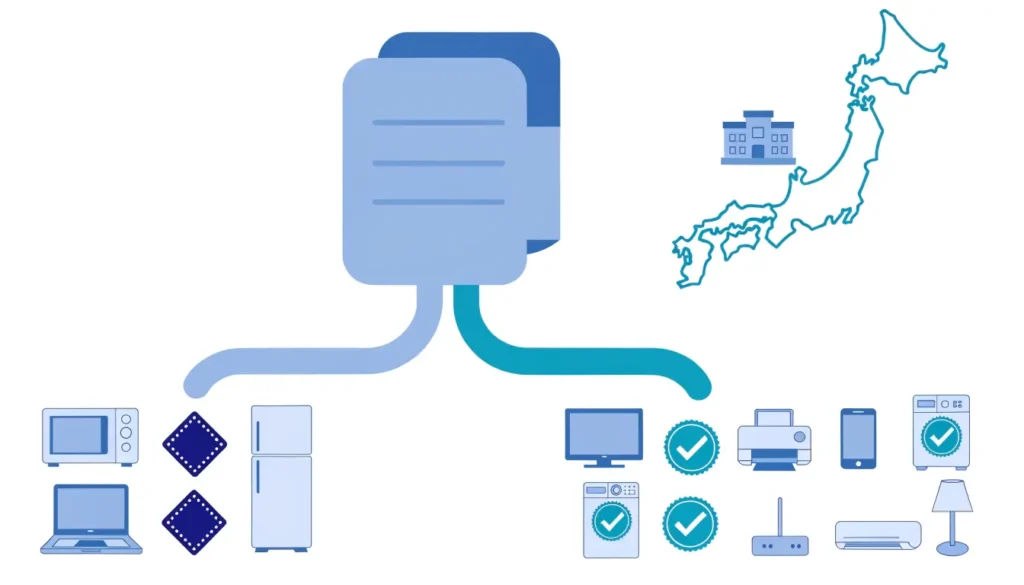
The Electrical Appliance and Material Safety Law covers 457 designated electrical products. Japan divides these products into two main groups:
Specified Electrical Appliances and Materials (116 products)
This group includes:
- AC/DC power adapters and power supplies
- Electric water heaters
- Induction cooktops
- Certain lithium-ion batteries
- Wiring accessories
Non-Specified Electrical Appliances and Materials (341 products)
This group includes:
- LED lamps and lighting fixtures
- Small household appliances
- Audio and video equipment
- USB chargers and accessories
- Computer peripherals
To determine whether your hardware product falls under PSE start by checking METI’s official designated product list published on its website.
The English implementation guide (Ver. 4.0) is also a useful starting point. You can use it to compare your product’s function and electrical characteristics with the definitions for each product category.
If you cannot clearly determine the correct classification from the list, you can have a registered certification body, such as JQA or TÜV SÜD, review your product specifications. They can help confirm the correct product category before you begin testing.
Why What You Call the Product Does Not Decide the Answer
Calling your hardware product a smart device, connected accessory, or charger does not determine whether PSE applies. These are sales descriptions and METI’s classification system does not use them. What matters is the product’s function, electrical design, and construction, and how those characteristics match the definitions in METI’s product list.
PSE classification is also more specific than most hardware product teams expect. METI clearly separates an AC/DC power adapter from the device that the adapter powers. The fact that the adapter appears on the list does not automatically mean the connected device falls into the same category.
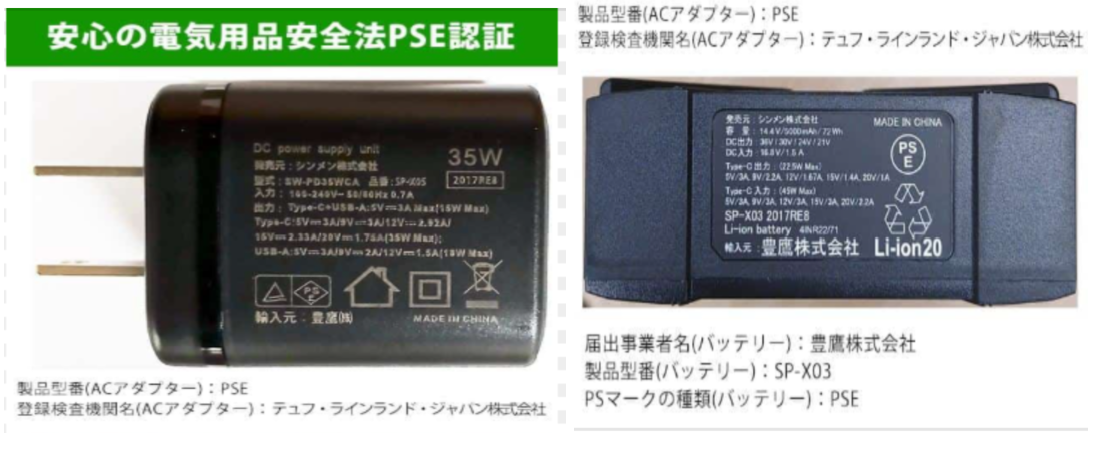
If you are developing a hardware product that combines power conversion with another function, check the classification separately. Do not assume your product follows the same compliance path as another product that looks similar from the outside.
If Your Product Falls Outside the List
If your hardware product is not on the designated list, PSE requirements do not apply to it.
That does not mean the product is automatically cleared for the Japanese market. Other Japanese regulations may still apply, depending on what the product does and how it operates.
How Does Your Product’s Design Affect Which Compliance Path You Follow?
Once PSE applies to your hardware product, the product’s electrical construction, components, and power arrangement determine which compliance path is required.
There are two paths, and your product’s classification determines which one applies. You do not get to choose the path.
How Diamond PSE and Circle PSE Work Differently
Your product’s classification determines what happens next, including the cost, timeline, and level of third-party involvement required.
| Specified Products (Diamond PSE) | Non-Specified Products (Circle PSE) | |
|---|---|---|
| Number of products | 116 | 341 |
| PSE mark | Diamond PSE | Circle PSE |
| Who certifies | Registered third-party body | Manufacturer self-declaration |
| Factory audit | Required | Not required |
| Typical cost per model | $5,000 – $6,500 | $1,700 – $2,000 |
| Typical timeline | 6 – 8 weeks | 1 – 3 weeks |
Specified products must go through an independent, government-registered certification body before the Diamond PSE mark can be placed on the product.
For Non-Specified products, the manufacturer can self-declare compliance after testing. That is why the Circle PSE path is faster and less expensive.
The difference in cost and time is significant enough to affect how you plan hardware product production and your launch date.
Your Product’s Specifications Decide the Category, Not You
The category your hardware product falls into depends on its electrical construction, components, power ratings, and the specific details METI uses to define each product type.
Two products that look almost identical on a retail shelf can fall into different categories because of these technical details. Looking at the PSE mark used by a competitor is not a reliable way to determine your own compliance path.
You cannot choose the Circle PSE path simply because it costs less or moves faster. If your product is a Specified Product, the Diamond PSE path with independent third party certification is a legal requirement.
The sooner you confirm which category applies to your hardware product, the more accurately you can plan for the cost and time required for PSE certification.
What Happens When the Design Changes During Development
Prototypes rarely match the final production hardware exactly.
Changing components or modifying the electrical design can change which product category applies. Changing how the product is configured can also affect its classification.
Any significant design change should be reviewed against the PSE compliance requirements before the hardware product design is finalised. At that stage, there is still time to act on what the review finds.
Before Manufacturing Starts, Who Handles What?
Under DENAN, the factory that builds your hardware product and the business that carries Japan’s legal obligations for that product are two separate roles. You might assume the manufacturer handles compliance because they build the product. That assumption is where many pre-production problems start.
The Factory and the Legally Responsible Party Are Not the Same Thing
The business that carries Japan’s legal obligations for a product is called the notifying supplier. This is the business responsible for making sure the product meets Japan’s requirements. It is not always the factory that builds the product.
Depending on how the business is structured, the responsible party could be your company, a Japanese distributor, or another company in the supply chain.
That said, overseas factories can take part in the certification and testing process. Both JQA and TÜV SÜD have procedures that allow foreign manufacturers to take part in the process for Specified products.
Taking part in testing is different from being the legally responsible party in Japan. You need to clearly identify both roles before production begins.
What the Legally Responsible Party Must Do
The responsible party’s obligations under the law include:
- Registering the business with METI before products enter the market
- Confirming that the product meets the applicable safety standards
- Carrying out or arranging the required product inspections
- Keeping the necessary records throughout production
- For Specified products: going through independent third-party certification with a registered body
METI registration and PSE certification are two separate steps. Getting the PSE certificate does not automatically register the product with METI. You must complete both before the product can legally enter the Japanese market.
What to Agree With the Manufacturer Before Production Begins
You will need a clear set of technical information from your manufacturing partner. Depending on the product, this typically includes product specifications, circuit diagrams, component details, factory information, inspection records, and labelling information. JQA’s application requirements for Specified products list these categories explicitly.
Before production starts you and your manufacturer should have a written agreement on:
- Who registers the business with METI
- Who arranges and pays for compliance testing
- Who keeps inspection records during production
- Who reports design changes to the certification body
- Who prepares and holds the required compliance documents
Leaving these questions open until after production is underway is where many compliance problems begin.
What Does the PSE Certification Process Actually Involve?
Getting PSE certification is not a single step. It is a sequence of decisions, submissions, testing, and approvals that must happen in a specific order. Skipping any part of the process can create problems that become harder to fix the later they are discovered.
The Step-by-Step Certification Process
- Confirm whether the product is Specified or Non-Specified
- Select a METI-registered certification body such as JQA, JET or TÜV SÜD
- Submit product samples and supporting documentation
- Complete safety and EMC testing
- Complete the factory audit, for Diamond PSE only
- Receive the PSE certificate from the registered body
- Complete METI registration before the product enters Japan
What PSE Certification Costs by Product Type
The figures below come from JJR Lab’s PSE certification cost guide, last updated in November 2025 Circle PSE costs cover testing and certification fees only. They do not require a factory inspection. Diamond PSE costs include testing, certification, and factory inspection fees.
| Product | PSE Type | Approx. Total Cost | Timeline |
|---|---|---|---|
| Humidifier | Circle PSE | ~$1,700 | 1 to 2 weeks |
| Electric water heater | Circle PSE | ~$2,000 | ~3 weeks |
| Power adapter (AC/DC) | Diamond PSE | ~$5,000 | 6 to 8 weeks |
| Switching power supply | Diamond PSE | ~$6,500 | 6 to 8 weeks |
Costs vary depending on the complexity of the hardware product. You should also budget for product sample preparation and shipping to the testing laboratory. You may also need to pay re-testing fees if the initial tests fail.
For Diamond PSE products, ongoing annual surveillance audit costs typically run at 20 to 30% of the initial certification cost.
A Test Report and a PSE Certificate Are Two Different Things
Third-party laboratory testing produces a test report. This report shows that the product was tested and records the test results.
For Specified products, a test report alone is not enough. Japanese law requires an additional step: independent certification from a government registered body. That body issues the formal PSE certificate and authorizes the diamond PSE mark.
JQA lists testing and certification as two separate services. One does not replace the other.
In practice, this means you can have a completed test report and still be unable to apply the diamond PSE mark until the certification step is complete.
What Evidence the Certification Process Typically Requires
The exact documentation depends on the product and the certification path it follows. However the process generally involves:
- Product specifications and circuit diagrams
- Component information and material details
- Safety and EMC test results
- Factory inspection records
- Label design and product samples
For Non-Specified products, the responsible party keeps all of this documentation and must be able to provide it if METI asks for it.
Compliance Does Not End When Testing Is Done
You must carry out ongoing product inspections and keep records throughout production. Compliance does not stop after the product receives its initial certification.
METI’s market surveillance activities have found electrical products that passed initial testing but later failed to maintain consistent production standards.
If the product changes after certification, check whether those changes affect its existing PSE compliance status before continuing production. A substituted component, an updated circuit, or a move to a new factory can all trigger the need for re-evaluation.
What Does the PSE Mark Actually Confirm?
The PSE mark tells buyers and authorities that your product meets the applicable legal requirements under Japan’s Electrical Appliance and Material Safety Law.
Both the diamond mark and the circle mark have legal significance. They apply to different product categories and follow different compliance paths.
Applying a circle mark to a Specified product is not a workaround. It is a labelling violation, regardless of what testing the product has completed.
The Mark Covers More Than Just the Symbol
Applying the PSE mark correctly involves more than printing a diamond or circle on the product.
The rules specify what information must appear alongside the mark, including the name of the responsible business and the product model.
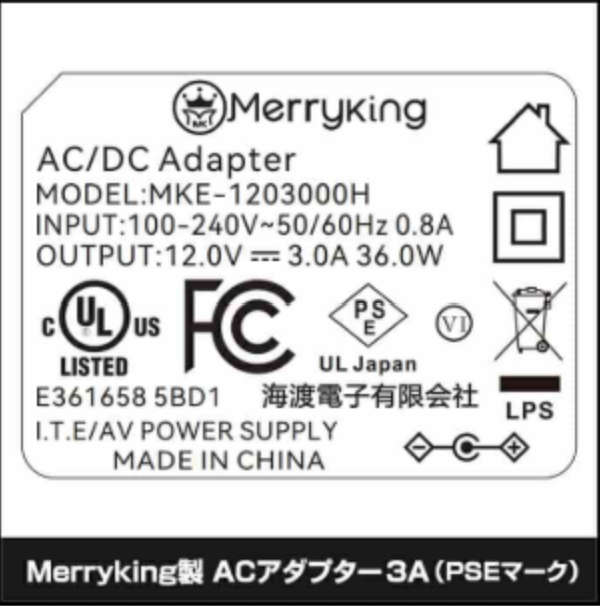
Applying the wrong mark, leaving out required information, or placing the mark where it cannot be seen without opening the product is a compliance failure.
This still applies even when every other step in the product certification process was completed correctly.
PSE Does Not Cover Every Japanese Requirement
Completing PSE certification satisfies the Electrical Appliance and Material Safety Law. However a hardware product with wireless capability has separate obligations under Japan’s radio law. A hardware product with a battery may also face additional requirements.
Treating PSE as the only compliance step creates gaps in other areas that you may not have reviewed yet.
What to Have in Place Before the Product Goes to Market
Before you sell the hardware product in Japan, confirm:
- Whether PSE applies to the specific product
- Which category the product falls into, Specified or Non-Specified
- Which business is legally responsible for the product, and whether it has met its obligations
- Whether the product has been tested against the correct requirements
- Whether required inspections are complete and the records are maintained
- Whether independent third-party certification has been completed where required
- Whether the correct PSE mark, with all required information, is applied correctly
- Whether any other Japanese requirements relevant to the hardware product have been addressed
Sort Out PSE During Development, Not After
PSE compliance is easier to manage when you build it into your hardware product development process from the start. If you wait until manufacturing is already locked in, the problem becomes harder and more expensive to fix.
First, confirm whether PSE applies to your product. Then identify the correct product category, establish which business has the legal responsibilities in Japan, arrange the required testing and certification, complete METI registration, and apply the correct PSE mark. After that, check for any other Japanese requirements that apply to your product.
If your electrical hardware product is moving toward the enclosure design and production stage, StartupMolding can review your design for manufacturability before production begins. Its services cover:
- Enclosure DFM review
- Prototype injection molding
- Mold design and manufacturing
- Production injection molding
You can share your enclosure CAD files, component and layout information, and production requirements with StartupMolding for a manufacturability review.
Frequently Asked Questions
How do you find out which of the 457 product categories your product falls under?
METI publishes the full product list on its website. The English implementation guide (Ver. 4.0) is a practical place to start. If you are not sure which category your hardware product falls under, a registered body such as JQA or TÜV SÜD can confirm the correct category before testing begins.
Does the manufacturer have to be based in Japan to go through the certification process?
No. Overseas manufacturers can take part in testing and inspection for Specified products. The separate issue is deciding which business will hold the legal responsibilities in Japan. That responsibility must be assigned before production starts.
If a product already has CE certification, does that carry over into PSE certification?
Not automatically. Some CB Scheme test data may be accepted when the standards align, but Japan’s requirements can differ from IEC standards. The certification body decides which test data it will accept.