
IC certification is Canada’s approval system for wireless products. It confirms that your product’s radio signals meet Canada’s requirements before you can sell the product in Canada.
A department called Industry Canada used to manage this program. That is where the term “IC certification” comes from. Today, Innovation, Science and Economic Development Canada manages the same program. Most people simply call it ISED. The requirement has not changed. Only the department’s name changed.
This article explains what IC certification actually covers, which Hardware Products need it, how the certification process works, what happens when your wireless module is already certified, and what you still need to handle before your product can be shipped to Canada.
What Is IC Certification, and What Does It Actually Do?
IC certification is Canada’s way of ensuring that wireless products don’t interfere with other wireless products, emergency services, cell towers, or broadcasting networks before they reach the market.
Think about what happens when a Hardware Product sends a wireless signal. The product sends radio energy through the air. Without proper rules signals from different products can interfere with each other. This can cause dropped connections, disrupted services, and serious safety problems. IC certification is designed to prevent electromagnetic interference before your product reaches a customer.
IC certification confirms that your wireless hardware product meets Canada’s requirements before it reaches your customers.
Why Everyone Still Calls It IC Certification
In 2016, Industry Canada was reorganized and renamed Innovation, Science and Economic Development Canada, or ISED. The certification program moved under the new department as well. However, the industry continued using the older term. Suppliers, manufacturers, factories, Amazon Canada, and compliance teams still use “IC certification” every day.
When you hear the term “IC certification,” it means the same certification system that is now managed by ISED.
What the IC Number on the Label Means
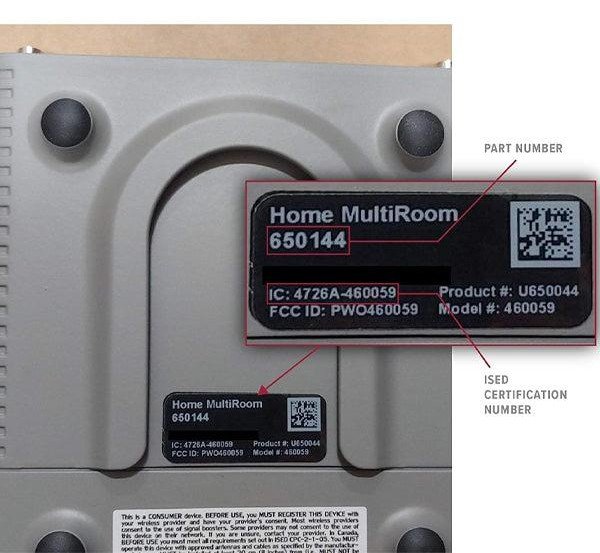
Once a wireless hardware product passes Canada’s approval process, it receives an IC number, now formally called an ISED certification number. You may also hear it called an IC ID number. That number appears on the product label and always starts with “IC:”. For example: IC: 12345A-PRODABC. The number connects your hardware product to its official entry in Canada’s database of approved wireless products, called the Radio Equipment List (REL).
Customs officers, online marketplaces, and retailers use the REL to confirm that your wireless product is approved for sale in Canada.
What IC Certification Does and Does Not Cover
IC certification checks whether your hardware product’s wireless signals comply with Canada’s rules. It does not cover electrical safety, hazardous materials, or any other category. So, if your hardware product needs those approvals too, you must meet those requirements separately.
It is also important to understand that certifying your hardware product for the Canadian market and getting permission to operate on a licensed radio frequency are two separate things.
For consumer hardware products, such as routers, earbuds, smart home devices, and wearables, licensed radio frequency requirements only become relevant for very specific types of professional radio equipment that operate on licensed spectrum.
Which Products Actually Need IC Certification Before They Can Be Sold in Canada?
The real question when determining whether your hardware product needs IC certification is simple: does your product send wireless signals?
Wireless Products That Typically Require IC Certification
If your hardware product transmits wireless signals in any form it almost certainly needs IC certification before it can enter the Canadian market. That includes:
- Wi-Fi routers, hotspots, and wireless access points
- Bluetooth products headphones, speakers, smartwatches, earbuds
- Smartphones and tablets
- Laptops and computers with built-in Wi-Fi or Bluetooth
- Smart home devices, connected sensors, wireless security cameras, and video doorbells
- Smart TVs and media streaming devices
- Drones, remote-control toys, and wireless game controllers
- Two-way radios and walkie-talkies
Category I vs. Category II: Two Types of Wireless Products in Canada
Not all wireless hardware products follow the same certification route. Canada separates them into two groups, and the group your product falls into determines the certification process you need to follow.
| Product Type | Category | What You Need to Do |
|---|---|---|
| Most consumer wireless products, including Wi-Fi, Bluetooth, and cellular products | Category I | Get a formal approval certificate and appear in Canada’s database before selling |
| Certain lower-risk or lower-power wireless devices | Category II | No formal certificate is needed, but the product must still follow Canada’s technical rules |
In practice, most hardware manufacturers fall under Category I products. Before your product can be imported, listed for sale, or sold in Canada, it needs a valid approval and an active listing in the Radio Equipment List. That is the law, not a suggestion and it is the legal condition for market access in Canada.
This is also why saying “every wireless product needs an IC ID” is not quite accurate. Your product category determines the certification path, and identifying that category is the first step before any testing or paperwork begins.
If your hardware product has no wireless function, IC certification simply does not apply. However, other Canadian requirements may still apply depending on what the product does.
How the IC Certification Process Works From Start to Finish
Once you confirm that your hardware product needs IC certification, here is what the process actually looks like, from identifying the right rules to getting your approval in hand.
Step 1: Know Which Canadian Rules Apply to Your Product
The first thing you need to establish is which technical standards apply to your specific hardware product. Canada uses different rules depending on what your product does wirelessly:
- Wi-Fi and Bluetooth products follow a standard called RSS-247
- All wireless products also follow a set of general rules called RSS-Gen
- Products worn on or held close to the body, such as a smartwatch or wireless earbuds, must meet additional safety limits for how much radio energy the body absorbs
These are Canada’s radio frequency requirements, and they vary based on the specific wireless technology your product uses. Your test lab will identify and apply the right rules for your hardware product. Still, knowing these rules exist helps you understand why two products that look similar on the outside can go through completely different tests.
Step 2: Prepare Your ISED Certification Documentation Package
Before you submit anything, you need to compile a complete package of information about your hardware product. This typically includes:
- Product specifications and model number
- Details about the wireless module or chip inside the product
- Antenna information
- Diagrams showing how the hardware product is built internally
- Photos of the product, both inside and outside
- The user manual
- Safety exposure information, where required
If your company does not have a Canadian address, you must appoint a Canadian representative before you can submit anything.
That representative responds to the Canadian government on your behalf and makes product samples available if they are ever requested. Without one, your submission will not move forward.
Step 3: Test Your Product at an ISED-Recognized Testing Lab
Testing must be done through a lab that Canada has specifically approved for this work. The lab runs your hardware product through the relevant tests, confirms whether it passes, and produces the test reports that go into your application.
Keep in mind that the tests are not the same for every hardware product. A Wi-Fi router and a Bluetooth earbud do not go through identical tests.
Step 4: Submit the Application and Receive Your Approval
Once your documents and test reports are ready, everything is submitted to a certification body that Canada recognizes.
When the hardware product passes, you receive a formal approval certificate, and your product is added to Canada’s Radio Equipment List. ISED data shows that non-compliant wireless products entering Canada can trigger fines of up to CAD $25,000 per violation. That is exactly why you need to confirm your approval before distribution, rather than waiting until a shipment gets flagged.
What Does IC Certification Actually Cost?
Most certification guides leave this part out entirely. That can be frustrating when you are trying to plan a launch budget.
The total cost depends on your hardware product’s complexity and how many wireless technologies it uses. Here is a realistic picture of what manufacturers typically spend:
| Cost Area | Typical Range |
|---|---|
| Accredited lab testing | $2,000 – $6,000 |
| Certification body fees | $500 – $1,500 |
| Canadian representative (annual) | $500 – $2,000 |
| Total estimate | $3,000 – $10,000+ |
| Typical timeline | 4 – 8 weeks |
A hardware product with both Wi-Fi and Bluetooth will cost more because each technology is assessed separately.
Rushed timelines can drive costs up even further. The more preparation you complete before engaging a lab, the smoother and less expensive the process tends to be. That preparation starts earlier than most hardware product teams expect.
Your Wireless Module Is Already IC-Certified. Does That Cover Your Finished Product?
This is the first question most hardware manufacturers ask, and it deserves a direct answer.
What a Pre-Certified Wireless Module Means for Your ISED Certification
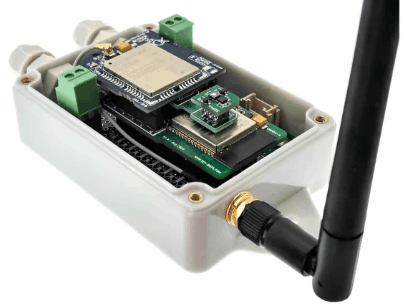
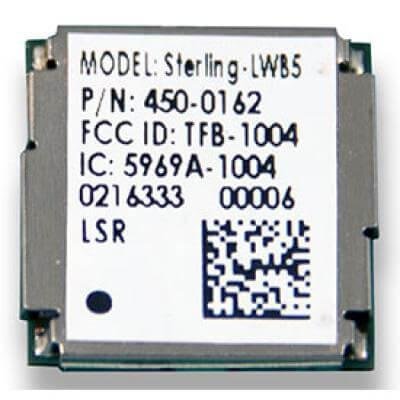
Many hardware manufacturers build their products around a wireless module from a supplier. This is a small chip or board that handles the Wi-Fi or Bluetooth function.
If that module already has its own IC certification, that gives your hardware product a genuine head start. Canada’s rules say a finished product built around a pre-certified module generally does not need its own separate approval, as long as certain conditions are met.
Why the Module’s IC Certification Does Not Automatically Cover the Finished Product
The module’s approval covers the module itself. Before you rely on that existing certification, you need to confirm that your finished hardware product is built in a way that the module’s certification allows.
If it is not, your product may need to go through a full conformity assessment. Finding that out late in the hardware product development process can be a costly problem to fix.
What to Ask Your Module Supplier Before You Finalize the Design
Before you lock the enclosure or place a tooling order get these details confirmed by your module supplier:
- The exact module model and version number
- The IC certification number
- The approved antenna options, including type, size, and placement rules
- Any restrictions on how the module must be installed
- Safety limits that apply to how the finished product will be held or worn
Finding out that your hardware product design conflicts with the module’s installation rules after the mold is already made is expensive. Asking these questions during the design phase, though, costs nothing.
How Antenna Placement and Module Integration Affect Your IC Certification
Where the antenna sits inside your enclosure, how close it is to other components, and how the module physically fits into the hardware product can all affect whether the module’s existing certification still applies to your finished device.
If your design eventually changes how the radio signals behave compared with how the module was originally tested, that becomes a compliance question. You need to answer that question before launch, and not after.
What to Do After Your IC Certification Is Approved in Canada
Getting your approval certificate is a major milestone. A few things still need to be in place before your hardware product is legally on the Canadian market.
IC Certification Label Requirements for Products Sold in Canada
Every certified product must display, its IC number on the label in the format “IC: XXXXXX-YYYYYYYYYYY.” The label needs to be permanent and easy to read.
For very small products where space is limited, Canada does allow the number to appear in the manual or on the packaging. However, specific rules determine when that alternative applies, and your product must qualify for it.
Confirm Your Product Is Listed in the Radio Equipment List
Before you start shipping, check Canada’s Radio Equipment List and confirm your product appears there with the correct certification number.
That is the database customs, Amazon Canada, and Canadian retailers check when they want to verify that a product is approved. A certificate that has not yet been reflected in the REL means you are not fully in compliance, even if the certificate itself is valid.
How to Handle Product Changes After IC Certification in Canada
Once your hardware product is certified, you need to review any change you make to it. This includes a new antenna, a different module version, or a firmware update that affects how the radio works.
Canada recognizes four types of post-certification changes. The type of change your hardware product has determines what you need to do next:
| Change Type | What It Covers |
|---|---|
| C1PC | Minor changes that do not affect how the radio performs |
| C2PC | Hardware changes that affect radio performance but stay within approved limits |
| C3PC | Software updates that change how the radio behaves or add new wireless capabilities |
| C4PC | Using a certified module in a new product where radio performance or safety limits change |
Some changes can be handled without going through the full certification process again. Knowing which type of change you are dealing with tells you exactly what is needed.
U.S. FCC Certification Does Not Cover Canada
If your hardware product already has FCC certification for the U.S. market, that approval does not carry over to Canada.
The two countries use completely separate certification systems. Some test data from your FCC process may be usable in the Canadian application. However, your product still needs to go through Canada’s certification process on its own.
Both certifications need to be on your compliance checklist before you begin any cross-border distribution.
How Enclosure Design Decisions Affect Your IC Certification Outcome
Canadian certification does not start at the compliance stage. It starts at the design stage. The way you design your enclosure, where you place your antenna, and how you integrate your wireless module all directly affect whether your hardware product moves through the IC certification process smoothly or runs into problems that delay your launch.
If your wireless hardware product is approaching the enclosure design and production stage, StartupMolding works with hardware manufacturers at exactly this point. Its services cover:
- Enclosure DFM review
- Prototype injection molding
- Mold design and manufacturing
- Production injection molding
You can share your enclosure CAD files, module and antenna layout information, and production requirements with StartupMolding for a manufacturability review.
Frequently Asked Questions
Does IC certification expire?
In practice, IC certification is managed on a five-year cycle. However hardware changes, product updates, or changes to Canada’s rules can require a fresh review before those five years are over.
Can a product be sold in Canada while the IC certification application is still in progress?
No. Category I products must have valid approval and an active Radio Equipment List listing before they can be imported or sold in Canada. Selling the hardware product before approval is confirmed can put you at risk of fines and product removal from the Canadian market.
Does IC certification cover all Canadian provinces, or just certain regions?
IC certification covers the entire country. It is a federal requirement administered by the Canadian government so approval applies across all provinces and territories equally.
If my product is already selling in the U.S. with FCC approval, how long does getting IC certification typically add to the timeline?
If your FCC test data meets the conditions for use in a Canadian application, the process can move faster than starting from scratch. However, you should still plan for four to eight weeks from the point your documentation is ready to the point your approval comes through.