
REACH is not a certificate, a logo, or a single test report.It is the EU’s most comprehensive chemical regulation and controls which substances may lawfully be present in hardware products sold in Europe.
The most dangerous assumption companies make when entering the EU market is that REACH is only a chemical manufacturer’s problem. It is not, It applies to finished products components, and supply chains and will affect any business whose goods are imported into the EU regardless of where that business operates.
This article will explain what REACH compliance actually means in practice, who it applies to, and everything a business needs to know before putting a product on the EU market.
What is REACH Compliance and why does it matter for products sold in the EU?
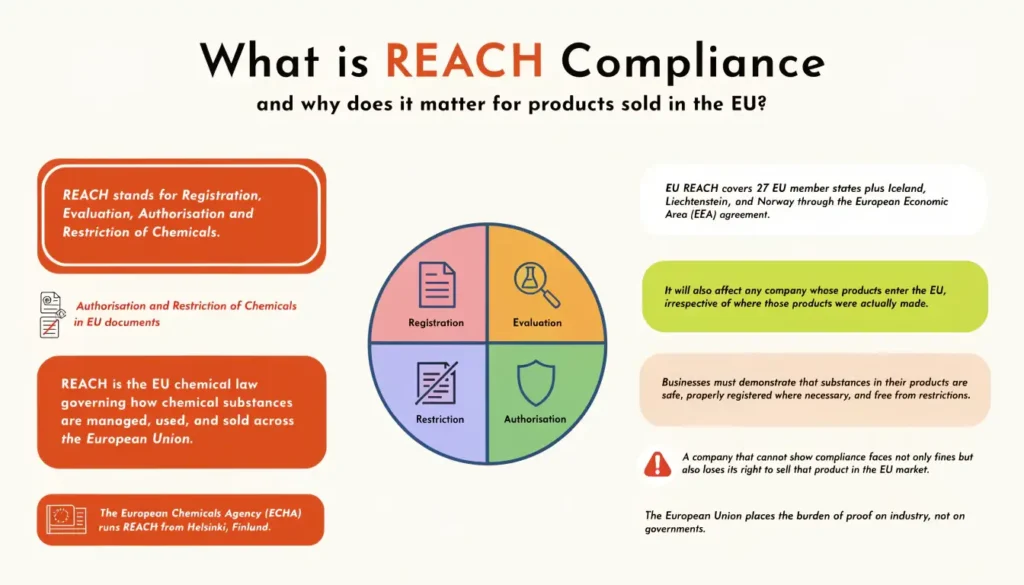
REACH compliance is the process of ensuring that the chemical substances within a product meet the EU’s legal requirements right before the product goes on sale in Europe. It matters because the European Union places the burden of proof on industry and not on governments1.
Businesses have to show that the substances in their products are safe, properly registered where necessary and free from any restrictions that apply to their specific product type. A company that cannot show this does not face just a fine it loses its right to sell that product in the EU market completely.
REACH stands for Registration, Evaluation, Authorisation and Restriction of Chemicals – also written as Authorisation and Restriction of Chemicals in EU documents. It is the EU chemical law governing how chemical substances are managed used, and sold all over the European Union. The European Chemicals Agency ECHA runs the REACH regulation from Helsinki, Finland.
EU REACH covers 27 EU member states plus Iceland, Liechtenstein, and Norway through the European Economic Area (EEA) agreement2.It will also affect any company whose products enter the EU irrespective of where those products were actually made.
Does REACH Apply to your business or product sold in the EU?
REACH applies not merely on what a business sells, but also on the role that business plays in the supply chain. That role determines exactly what it is legally required to do.
Three types of products under REACH
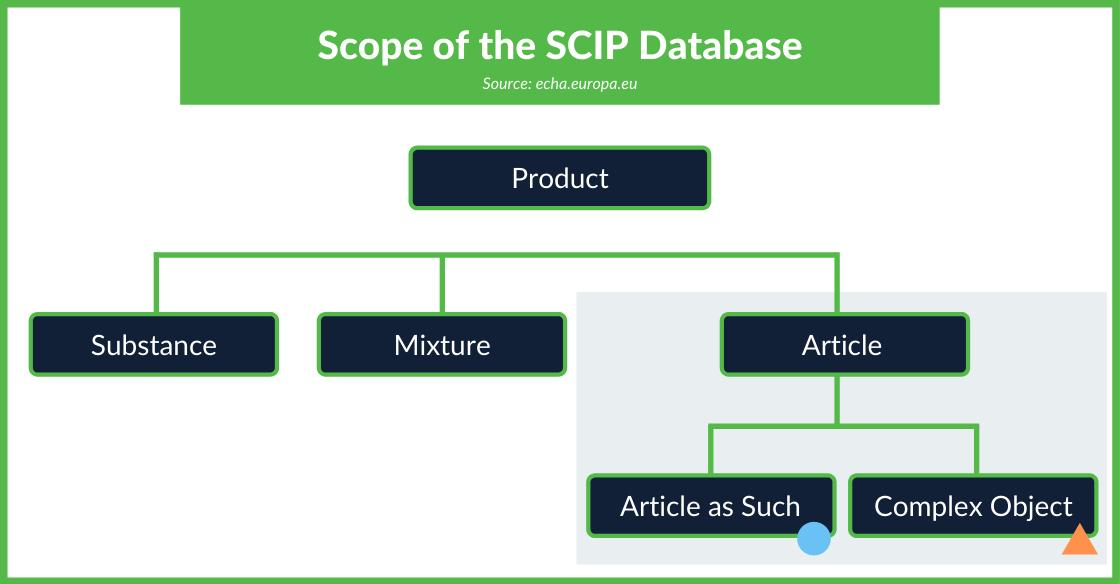
REACH differentiates between chemical matter into three groups, each having different rules.
| Category | What It Is | Common Example |
|---|---|---|
| Substance | A single chemical element or compound | A dye a solvent, a metal compound |
| Mixture | Two or more substances combined | Paint, glue cleaning spray |
| Article | An object whose function comes from its shape, not its chemistry | A T-shirt, a toy, a circuit board |
One product is classified into several categories. A pen is an item, but the ink within it forms a mixture and all these components may have their very own rules under REACH. So knowing which category applies to each element is where your compliance process begins.
Responsibility for EU market Access
REACH creates duties for four main roles:
- EU manufacturer: a company within the EU that produces substances, mixtures, or articles
- EU importer: a company within the EU that purchases products from outside the EU and puts them on the EU market
- Downstream user: a company that uses substances or mixtures in its own industrial or professional activities within the EU
- Only Representative: an EU-based company that a non-EU manufacturer designates to manage certain REACH responsibilities on its behalf. When established, EU companies purchasing from that manufacturer will be considered downstream users instead of importers – which changes what REACH demands of them
Distributors have communication responsibilities concerning information about substances but are generally not required to submit anything to ECHA.
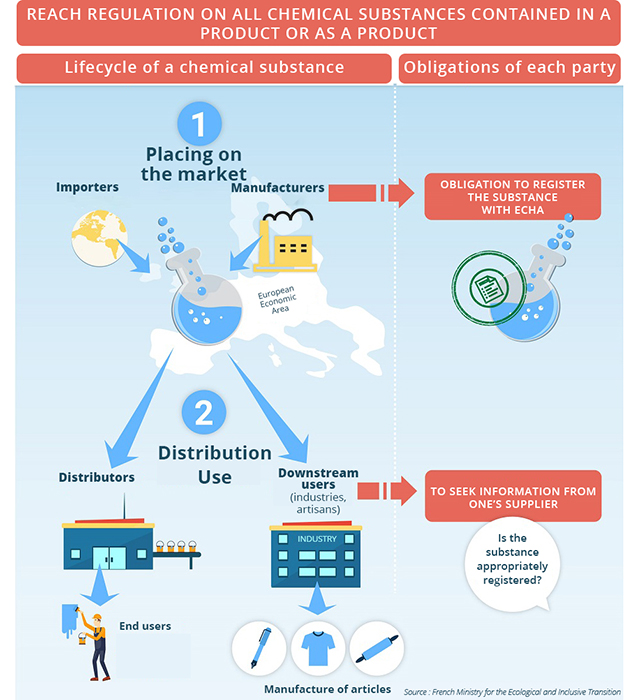
The key point is if a business is outside the EU and sells finished products to EU importers, it is not automatically required to register substances under REACH. However, it still has supplier duties. The EU importer bears the legal responsibility for products put onto the EU market, but that importer needs substance data from its suppliers so as to meet these obligations. A non-EU supplier that does not provide any substance information creates a compliance gap right within its customer’s supply chain.
How to Determine whether REACH applies to your product or your business role
In order to determine whether REACH applies, ask yourself three questions:
- Is the product going to be placed on the EU market?
- Does the company hold a role defined under REACH?
- Does the product contain any substance subject to restriction, authorisation, or SVHC communication?
If the answer to all three is yes, then the product is well within REACH’s scope.It doesn’t matter if the product is sold online, through a distributor, or through a physical store. If it reaches an EU customer it is well within REACH’s scope.
Where certain substances and products fall outside standard REACH requirements
REACH is not a single rulebook that applies identically to every product and business. Obligations really do vary greatly depending upon the substance, product type, how the substance is used, and the role of the business. Certain substances are entirely exempt from specific REACH requirements for example substances that are covered by separate EU legislation which addresses the very same risks, or those being used in highly controlled scientific research. Similarly, the same substance may have quite different obligations depending upon whether it is sold separately, blended into a mixture or incorporated into a finished item.
What REACH requirements apply to chemical substances and products?
REACH operates through four primary tools: Registration, Evaluation, Authorization, and Restriction. Not all four apply to every company.
Registration: applies to manufacturers and importers of chemical substances. Any substance produced or brought into the EU in quantities of one tonne or more annually has to be lodged with ECHA prior to its sale. The registration dossier details what the substance is, its hazard level, ways in which individuals and the environment is exposed and how these risks are managed.
Evaluation: represents ECHA’s examination of the filed information. This can result in businesses being asked for additional information on the application of a substance within the EU.
Authorization and restriction: are the two tools that may prevent companies from gaining access to the market. Authorization is applied to the most hazardous chemical substances – so dangerous that their use requires special permission from the European Commission. Once listed, a substance will have an end date. Post this date, no business may manufacture or sell the substance within the EU without first obtaining approved permission.
Restriction is where most sellers of finished products feel the REACH regulation most directly. Certain substances are banned or capped at fixed levels within specific product categories via a list of restricted substances. These levels applies to every participant in the supply chain, including companies that import finished goods – with no exceptions.
Common of entries from that list of restricted substances affecting consumer products include:
- Certain plasticisers making plastics flexible, capped at 0.1% in plasticised materials
- A type of chromium that may leach from leather goods, capped at 3 mg/kg
- Certain colouring agents in textiles and skin-contact leather capped at 30 mg/kg
- Certain compounds in rubber and plastic components capped at 1 mg/kg each
- Nickel release from metal components worn against the skin capped at 0.5 µg/cm² per week
What does REACH require if a hardware product contains substances of very high concern?
If a hardware product contains a Substance of very high Concern (SVHC) at levels over the 0.1% threshold, REACH requires four things:
- The company must provide SVHC information to all businesses it supplies.
- It must answer consumer inquiries about the substance within 45 days.
- It must inform ECHA whenever the relevant volume threshold is exceeded.
- It must present the necessary product information to ECHA’s public database prior to placing the hardware product onto the EU market.
Substances of very high concern SVHCs are chemicals that scientific evidence has already established as posing a serious threat to human health or the environment. ECHA adds a substance to this list since it is known to cause harm for example, induce cancer, impair reproductive health, accumulate within the body and environment without degrading, or interfere with natural hormone function.
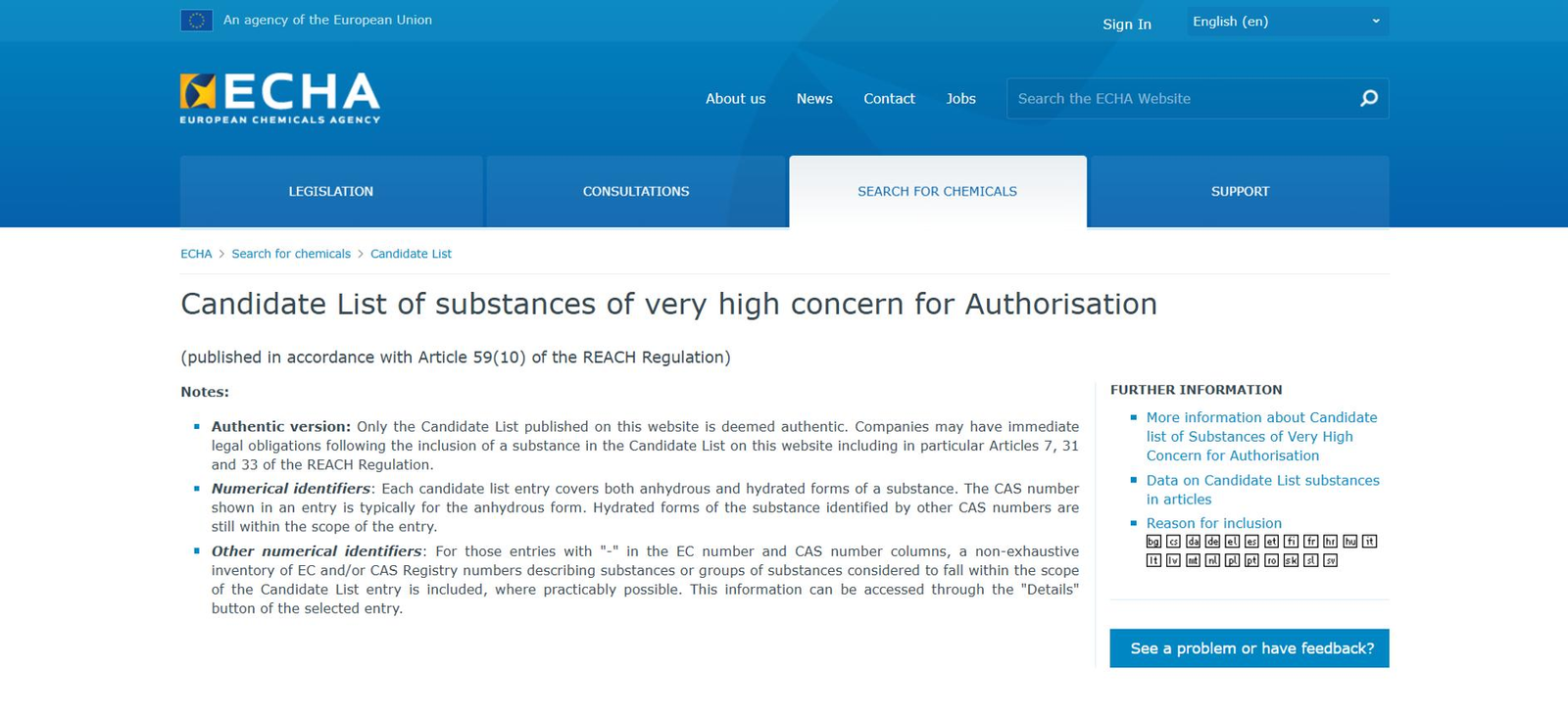
ECHA holds a constantly updated list called the Candidate List. It currently holds more than 240 substances and will continue to grow at each update and the instant ECHA actually adds a substance to the list, the relevant rules is in effect at once.
The 0.1% Threshold and What It Means for SVHC Compliance
The 0.1% calculation applies to each individual component, not the Hardware Product as a whole. For example, a jacket with a zip, a button, and a fabric panel must have each part checked separately. A high concentration in one small component cannot be averaged across the rest of the Hardware Product to reduce the percentage.
The B2B communication duty applies automatically. Whenever a business supplies another business with a Hardware Product containing an SVHC above 0.1%, the supplier must proactively provide the substance name, explain where the substance is found in the product, and provide safety information on how to handle it at the point of supply, without waiting for the customer to ask.
The consumer right, however, works differently. A consumer can ask whether a Hardware Product contains an SVHC above 0.1%. When that request is received, the supplier must respond within 45 days. The response must include the substance name and enough information to allow the Hardware Product to be used safely. Consumer organisations have actively tested brands by sending requests and tracking whether companies respond correctly and on time.
Beyond these two duties, two further obligations apply when the 0.1% threshold is exceeded in any individual component:
| Obligation | Who It Applies To | When |
|---|---|---|
| Notify ECHA of SVHC presence | Importers and producers above 1 tonne per year | Within 6 months of listing |
| SCIP database submission | EU producers and importers of articles containing a Candidate List SVHC above 0.1% | Before placing on market |
How to Check and Document REACH Compliance for Hardware Products in Your Supply Chain
The EU importer or manufacturer placing a Hardware Product on the EU market is legally responsible for checking compliance and being able to prove it. In other words, complying with REACH means having documentation that can withstand scrutiny not simply relying on a supplier’s signature.
Getting Chemical Safety Information from Your Supply Chain
Start by asking every supplier in the supply chain not only your direct suppliers to confirm in writing which substances their components contain. Ask them to identify the specific Candidate List version they checked and the date of that check. A general declaration with no date and no reference to a specific Candidate List carries little weight during an inspection.
Understanding What Documents Are Needed for Chemical Compliance
- A supplier declaration confirms which substances are or are not present in a component. However, the declaration depends on the supplier’s own knowledge of the materials used.
- A test report from an accredited laboratory independently verifies what a Hardware Product contains through physical testing. This provides stronger evidence, particularly when the Hardware Product uses high-risk material types.
- Safety Data Sheets communicate hazard and safe-use information for a chemical substance or mixture. They are required when substances or mixtures are supplied but finished articles, including finished Hardware Products, do not require one.
- Technical documentation is the internal record that supports REACH compliance. Supplier declarations, test reports, SCIP submissions, and communication records all form part of that documentation.
However, a generic document called a REACH certificate does not replace any of these records. ECHA does not issue REACH compliance certificates. What matters is accurate supplier declarations, verified test data, and documented communication records. Under REACH rules, all records must be kept for at least ten years.
What Penalties and Consequences Follow When a Hardware Product Does Not Meet REACH Requirements?
Authorities in each EU member state enforce REACH requirements. They can remove Hardware Products from shelves, require recalls, and issue financial penalties under national law.
The immediate consequence is the loss of access to the EU market. A Hardware Product containing a hazardous substance or restricted substance above its legal limit cannot be sold anywhere within the EU not while a reformulation is underway and not while supplier data is being reviewed.
For businesses that supply EU retailers or large buyers, commercial consequences often arrive before regulatory enforcement. Most major EU buyers require current substance declarations as part of their standard supplier checks. Failing to provide those declarations can eventually lead to Hardware Product delisting, terminated contracts, or cost recovery demands.
ECHA’s SCIP database is publicly searchable. Consumer organisations also regularly test Hardware Products against the Candidate List and publish their findings. That type of public exposure often lasts far longer than any financial penalty.
Do This Before the Next Hardware Product Goes to the EU Market
Before launching a Hardware Product, first confirm which supply chain roles apply to your business. Then collect supplier declarations that name the specific Candidate List version checked. Confirm which restrictions from the list of restricted substances apply to the Hardware Product category. Identify any hazardous chemicals above the 0.1% threshold in individual components, and ensure that SCIP submissions are in place where required before the first unit reaches an EU customer.
For Hardware Products already on the EU market, check them against recent Candidate List additions. New listings come with no grace period. ECHA’s published guidance on requirements for substances in articles is the most reliable starting point because it is written by the body responsible for enforcing the rules. And if you are still in the early stages of developing your hardware product, StartupMolding is the right place to start helping hardware startups move from concept to production-ready products at the exact stage where getting REACH compliance right makes all the difference.
Frequently Asked Questions about REACH Compliance
Does every hardware product sold in the EU need to comply with REACH?
Not quite in the same way. All hardware products sold in the EU have to fall within the legal limits for restricted substances. However, ECHA registration only applies to manufacturers and importers of chemical substances brought into the EU at one tonne or more per year.It doesn’t apply to every company that sells a finished hardware product.
Is there an official REACH compliance certificate?
No, there isn’t an official REACH compliance certificate.So, if a customer asks for one, the correct approach is to give them a supplier declaration, relevant test reports and safety data sheets if necessary. These documents actually prove which substances are present in the hardware product and what was tested. A letter simply stating ‘this product is REACH compliant’ really means nothing legally if there’s no supporting evidence behind it.
Who’s responsible if products are manufactured outside the EU?
The EU importer is responsible.In other words, if a non-EU manufacturer sells a hardware product to an EU-based customer, that customer is legally responsible for fulfilling the relevant REACH obligations. However, the non-EU manufacturer still has a very important part to play in the process because the EU importer won’t be able to fulfill those obligations without exact substance information from their suppliers. If that substance data is missing, incomplete or hard to read, the whole compliance chain can fail right at the beginning.
What’s the difference between REACH and RoHS?
RoHS only applies to electrical and electronic equipment and is handled through a CE marking procedure. REACH on the other hand applies to every product category. Some substances may be included under both regulations but meeting the needs of one doesn’t necessarily mean your hardware product will automatically meet the requirements of the other either.
How often does the Candidate List get changed?
The Candidate List is no longer only updated according to its old twice-yearly schedule anymore. Updates can actually happen outside that schedule. For hardware manufacturers the most reliable way to do things is to sign up to ECHA’s update notifications and keep a constant watchful eye on new listings against your current products. This really helps make sure that changes to the Candidate List don’t slip past you and that all your existing hardware products continue to be properly evaluated.
-
"Chemicals Policy Gap: Toward Stronger Regulation in … – PMC", https://pmc.ncbi.nlm.nih.gov/articles/PMC2721895/. Under REACH, the burden of proof for chemical safety shifted from public authorities to manufacturers and importers, who must demonstrate that substances can be used safely before placing them on the market. Evidence role: mechanism; source type: government. Supports: REACH regulation places responsibility on industry to demonstrate chemical safety rather than requiring government authorities to prove harm. ↩
-
"Q&A about the EEA Agreement | European Free Trade …", https://www.efta.int/eea-relations-eu/qa-about-eea-agreement. REACH applies in all EU member states and was incorporated into the EEA Agreement, extending its application to Iceland, Liechtenstein, and Norway. Evidence role: general_support; source type: government. Supports: REACH regulation applies beyond EU member states to EEA countries through the EEA agreement. Scope note: The number of EU member states may change over time; verification should confirm current membership count. ↩