
If you’re building a connected hardware product you’ve heard "Bluetooth certified" often. Your module supplier says the hardware is qualified. Your firmware team says the stack is ready. But when you ask what you need to complete before selling, nobody can give you a clear answer.
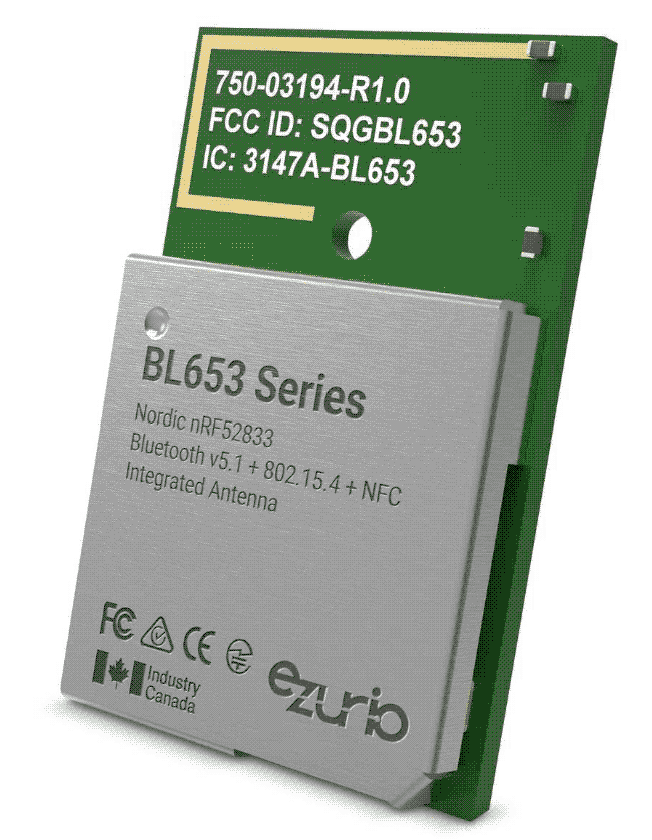
Bluetooth qualification is not one test or stamp. It is a process that is managed by the Bluetooth Special Interest Group (SIG), and it applies differently depending on how your product uses Bluetooth technology. When you Integrate a pre-qualified module and don’t skip the process, you follow a simpler path. If you design your own Bluetooth implementation, the road is longer.
This article explains what the Bluetooth qualification process requires and what must happen before you can legally bring your product to market.
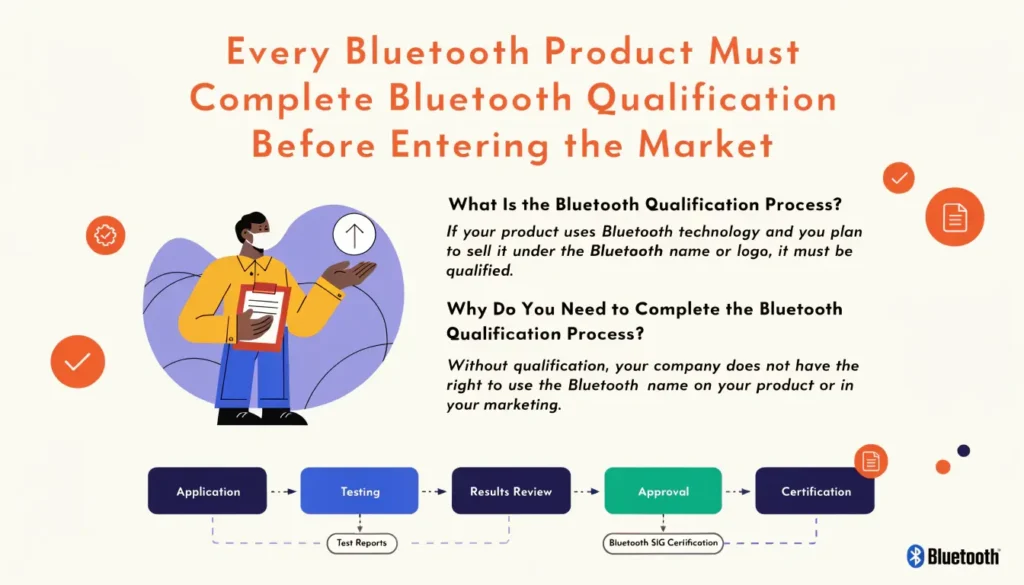
Every Bluetooth Product Must Complete Bluetooth Qualification Before Entering the Market
Yes and this rule applies broadly. If your product uses Bluetooth technology and you plan to sell it under the Bluetooth name or logo, it must complete the Bluetooth Qualification Process. Without qualification, your company does not have the right to use the Bluetooth name on your product or in your marketing.
What Bluetooth Certification Is
Bluetooth qualification is the process run by Bluetooth SIG to confirm that a product using Bluetooth technology meets the Bluetooth specification. Most people call it Bluetooth certification, but the official term is qualification.
In practice, it confirms that the Bluetooth technology in your product works as intended, connects reliably with other Bluetooth devices, and meets the Bluetooth specification. After qualification, your product will be listed in the Bluetooth SIG’s Qualified Products Database showing that the process was completed and that your company has the right to use the Bluetooth name and logo.
Who Is Responsible for Bluetooth Certification and When
Not everyone involved with a Bluetooth product has the same responsibility:
- If you design and sell your own Bluetooth product under your company name, you are responsible for Bluetooth certification.
- If you integrate a Bluetooth module and sell the finished product under your brand, you are still responsible for certifying your finished product. Your supplier’s certification does not cover your product.
- When you manufacture for another company that sells the product under its own name, that company is responsible.
- Reselling an already-certified Bluetooth product without changes less may be required from you.
The responsibility belongs to whoever brings the product to market under their own name. For timing your product must be listed in the Qualified Products Database before it goes on sale under the Bluetooth name.
What Bluetooth Certification Does Not Cover
However, Bluetooth certification only covers your Bluetooth technology and your right to use the Bluetooth trademark. It does not determine whether your Hardware Product is approved for sale in the United States, the EU, the UK, or any other market. Each market has its own regulatory requirements. In the US, FCC authorization is the government approval that allows radio frequency devices to operate legally. In the EU, CE marking under the EU Radio Equipment Directive is the conformity requirement for radio equipment. You must meet these requirements separately. You cannot legally sell your Hardware Product without the required approvals, even if it has Bluetooth qualification.
Your Supplier’s Bluetooth Certification Does Not Cover Your Finished Product
When a supplier says its Bluetooth module is Bluetooth certified, that certification belongs to the supplier’s design and remains in the supplier’s Bluetooth SIG account and not yours. The certification does not transfer to your finished Hardware Product. A pre-certified module can make your certification process easier, but it cannot replace your own certification.
What a Pre-Certified Bluetooth Module Actually Gives You
Now, if your supplier’s module has already been qualified, you may be able to reference that design in your own certification submission. This can reduce additional testing and help speed up the process. Hardware Products that use an unchanged pre-certified module often follow a faster and less expensive certification path. In many cases, if you use the module without changing its Bluetooth implementation, your qualification may mainly involve submitting and listing the product with no new testing required.
However, the pre-certified module cannot replace your own certification. You will still need to submit your Hardware Product through Qualification Workspace and list it in the Qualified Products Database under your company’s account.
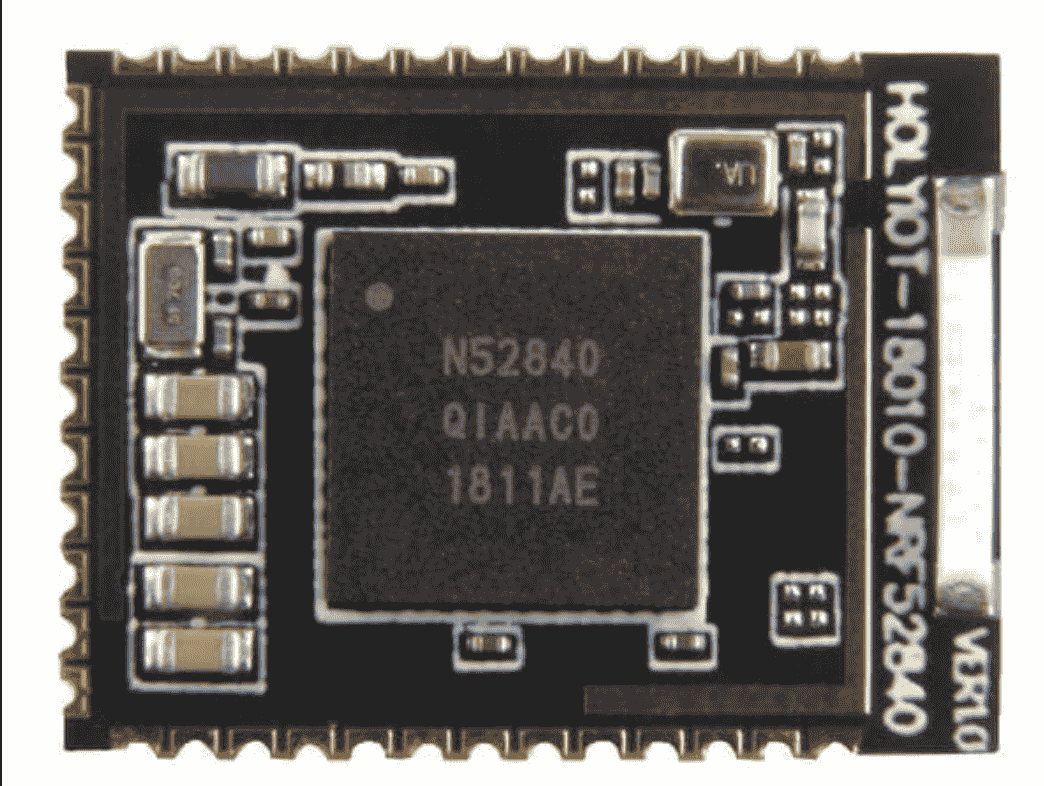
What to Ask Your Supplier About Their Bluetooth Qualified Design and How to Verify It
Before assuming your certification process will be easy, ask your supplier for:
- The Design Number (DN) or QDID if the module was certified before July 2024, which is simply the old name for the same thing.
- The exact model and version of the Bluetooth module you are buying.
- The specific Bluetooth features covered by the certification.
- Any conditions or limitations for example, the certification may only apply when you use the module in a specific configuration.
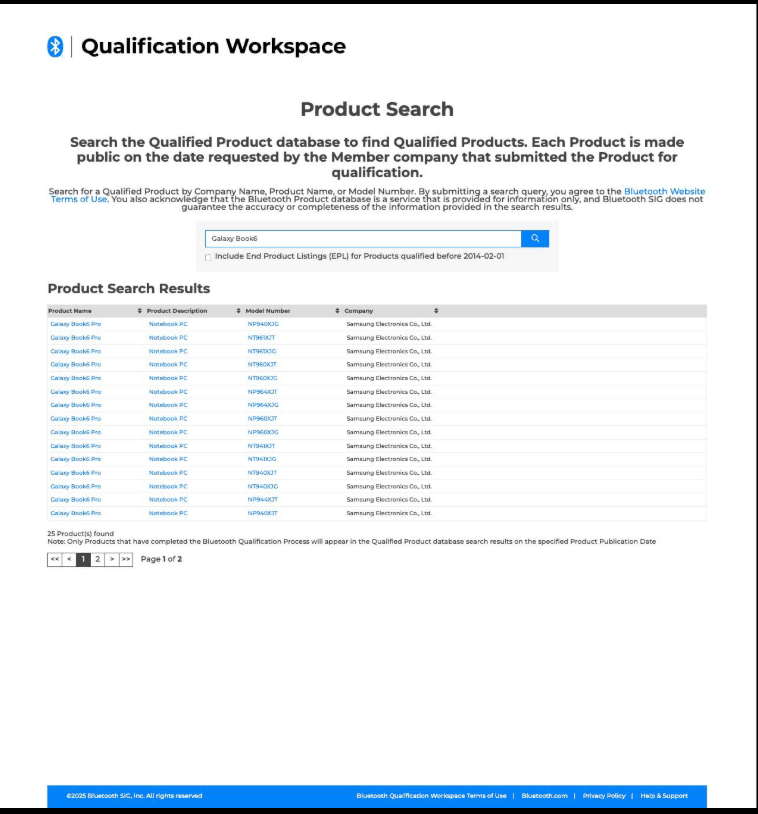
Do not rely only on your supplier’s word. The Bluetooth SIG Qualified Products Database at bluetooth.com is publicly searchable. Use it to confirm that the certification is current and covers the exact module version and Bluetooth features in your Hardware Product. Certification from an older version does not automatically carry over to a newer version.
What Happens If You Modified the Bluetooth Design
If you changed your Hardware Product’s Bluetooth functionality in any way such as adding features, combining designs, or modifying the wireless connectivity the supplier’s certification may no longer apply. This changes your qualification path and may require additional testing or a new submission. Bluetooth SIG evaluates what you changed. If the change affects an area covered by the original qualification, you must meet new testing requirements for those specific areas. Review your certification path in Qualification Workspace before assuming that the existing documentation still applies.
Bluetooth SIG Qualification Requirements and How the Process Works
Bluetooth SIG Certification Requirements at a Glance
| Requirement | What It Means |
|---|---|
| Bluetooth SIG Membership | You must join as a Bluetooth SIG member before certifying a Hardware Product |
| Your Bluetooth Design | You may use an existing certified design, combined designs, or a new design |
| Your Product’s Bluetooth Features | The specific Bluetooth capabilities your Hardware Product uses determine what testing applies |
| Testing | Testing depends on your qualification path not all Hardware Products require it |
| Accurate Product Information | Your Hardware Product name and model must match what you actually sell |
| Qualification Fee | You pay the fee through Bluetooth SIG’s system before your submission is approved |
| Record Keeping | Bluetooth SIG requires you to keep records for up to one year after your Hardware Product leaves to the market |
| Qualified Products Database Listing | You must list your Hardware Product before bringing it to market this is the confirmed output of a completed qualification |
Adopter membership is free. It gives you the right to use Bluetooth technology and access Qualification Workspace Bluetooth SIG’s online portal where you manage all submissions. You only pay when you certify and list a Hardware Product typically $4,000 to $8,000 when using a pre-certified module, and more when you use a brand-new Bluetooth design.
How to Certify Your Bluetooth Product Step by Step
- Join Bluetooth SIG as an Adopter member at bluetooth.com. This is free.
- Log into Qualification Workspace, the online portal where you submit everything.
- Enter your product name, model number, product description, and planned release date.
- Identify your Bluetooth design and the Bluetooth implementation inside your hardware product. Are you using an existing certified design, combining certified designs, or building a new Bluetooth design?
- Enter the Bluetooth features your product supports specific capabilities such as Bluetooth Low Energy. These features determine whether your product needs testing.
- Complete any testing required for your qualification path.
- Pay the product qualification fee and keep your receipt number.
- Submit your qualification with all required documents.
- Bluetooth SIG reviews your submission most reviews are completed within one business day. Once approved, Bluetooth SIG lists your product in the Qualified Products Database.
The product information you submit must match the hardware product you are actually selling.
Bluetooth Testing Requirements Depend on Your Product’s Certification Path
Not every Bluetooth product needs testing. The qualification path depends on your Bluetooth design and the features your hardware product supports, as the table below shows.
What Determines Whether Bluetooth Testing Is Required
| Your Situation | What Typically Happens |
|---|---|
| Using one existing certified design, unchanged | Additional testing is generally not required |
| Combining two or more certified designs | Bluetooth SIG determines whether interoperability testing applies |
| New Bluetooth design or modified design | Qualification Workspace generates a testing plan based on the features you entered you must complete this before your product can be listed |
In practical terms, if your hardware product uses a pre-certified Bluetooth module along with another separately certified Bluetooth component you are combining two designs. Bluetooth SIG then checks whether those designs work together consistently.
When Your Bluetooth Product Needs an Approved Testing Lab
If your certification path requires testing, you must complete it at a Bluetooth SIG-approved lab called a Bluetooth Qualification Test Facility, or BQTF. Bluetooth SIG will reject results from unapproved labs, and you cannot list your product until you complete the required testing properly. Confirm that the lab appears on Bluetooth SIG’s published list at bluetooth.com before you book the test.
For the timeline, plan for several weeks from sample submission to receiving the results. The exact timing depends on the lab’s schedule and your product’s testing requirements.
What to Prepare Before Bluetooth Testing and Why Post-Testing Changes Matter
- Your test sample must represent your final production design and not an early hardware prototype.
- The software installed on the test sample must match the software that will be shipped to customers.
- Document any differences between the test sample and the production version, even small differences.
- Your approved lab will confirm which test modes your device needs to support.
Once testing is complete, your certification is tied to exactly what you tested. Any hardware revision or software update that changes how Bluetooth works can affect that certification, identify those changes before you lock your production run.
Bluetooth Certification Does Not Replace Your Product’s Regulatory Compliance Requirements
Completing Bluetooth SIG certification is a major step. However, it does not mean your Hardware Product can legally be sold in every country. Each market has its own approval process, and Bluetooth SIG certification does not satisfy those separate requirements.
Bluetooth certification confirms that your Bluetooth technology meets the Bluetooth specifications and gives your company the legal right to use the Bluetooth trademark. However, it does not confirm that your Hardware Product is approved for sale in the US, EU, or anywhere else.
Bluetooth SIG governs the Bluetooth specification only. Each country’s regulatory authority controls what wireless products can legally operate on radio frequencies within its borders you must handle those regulatory requirements separately.
Regulatory Requirements by Target Market
| Market | What You Also Need |
|---|---|
| United States | FCC authorization required for all wireless products sold in the US. |
| European Union | CE marking under the EU Radio Equipment Directive. |
| United Kingdom | UKCA marking the UK’s own requirement. |
| Canada | ISED certification. |
| Japan, Brazil, South Korea, China | TELEC (Japan) Anatel (Brazil), MSIT (South Korea) MIIT (China) each requires its own country specific radio approval. |
Confirming Your Product Compliance Before You Lock Production
A module with an FCC ID or Declaration of Conformity does not automatically mean that your finished Hardware Product has those approvals.
Whether those approvals carry over depends on your integration, the other wireless technology in your Hardware Product your antenna setup, and the conditions of the module’s original approvals. Confirm this and do not assume it.
Before locking your production run, confirm:
- Your Bluetooth SIG certification is complete and your product is listed in the Qualified Products Database.
- Your target market regulatory requirements are in place or are actively being completed.
- Your final production design has not changed in a way that affects the above.
Moving Your Bluetooth Product Toward Production
Once you have addressed Bluetooth certification, required testing, and market-specific regulatory requirements, your Hardware Product is ready to go to market. From this point, keep the production design consistent with what you certified and tested.
The risk at this stage comes from small changes: a different antenna, a new module version or a software update that affects Bluetooth behavior. Any of these changes can reopen requirements that you already completed.
If you are still in the development phase of your Bluetooth product, StartupMolding can help you get the compliance side right from the start. It works with hardware startups at the stage where getting your certification and regulatory requirements right for your hardware product can make all the difference.
Frequently Asked Questions
Is Bluetooth SIG certification the same as FCC approval?
No – and confusing the two is one of the most common mistakes in developing connected hardware products. Bluetooth SIG qualification stems from a private industry organisation and deals with the Bluetooth specification. FCC authorisation is a legal requirement enforced by the US federal government for any hardware product that emits radio frequency energy. A hardware product could complete Bluetooth qualification and yet be illegal to sell in the United states without FCC authorisation.
Do I need a separate Bluetooth qualification for every country I sell in?
No – Bluetooth SIG qualification follows a single global process. When you list your hardware product in the Qualified Products Database that listing applies regardless of which country you’re going to sell it in. What does change from country to country are the regulatory requirements – FCC in the US, CE marking in the EU, ISED in Canada and others – but these requirements remain separate from Bluetooth SIG qualification. You qualify your hardware product once with Bluetooth SIG and then meet each market’s regulatory requirements independently.
Does Bluetooth certification expire?
No. However, making some major changes to your hardware product after qualification – like a new module version, a modified Bluetooth implementation or added Bluetooth features – might affect your existing qualification and require requalification.
Can I use the Bluetooth logo on my product once qualification is complete?
Yes, but only under certain conditions. Your company must remain an active Bluetooth SIG member, your hardware product must appear in the Qualified Products Database and you have to use the logo according to Bluetooth SIG’s brand guidelines. Using the Bluetooth name or logo on a hardware product that hasn’t completed qualification or letting your membership lapse while continuing to sell the product directly contravenes the Bluetooth SIG membership agreement.
What changed about Bluetooth SIG certification in 2024?
Bluetooth SIG updated its qualification rules in July 2024. The key changes are that QDID is now called a Design Number (DN), and the Declaration fee is now called the Product qualification fee. These are the terms you will see in Qualification Workspace today – knowing the older names also helps if you’re looking back at older supplier documentation.