
When you share product drawings, engineering files, or manufacturing details with an outside party, a non-disclosure agreement creates the legal obligation to keep that information private. Most startups sign one and assume the job is done. That assumption is where the problems start.
A confidentiality agreement protects information within the scope it defines, doesn’t determine who owns work created during a project, and doesn’t prevent a breach.
This article explains what an NDA is, how it works in product development, what information it can protect, what it cannot protect, which clauses define the scope of that protection, and how to combine it with other IP safeguards to keep your product information safe.
Non-Disclosure Agreements for Product Development and Manufacturing
Product development almost always requires sharing sensitive information with people outside your organization. Manufacturers, engineers, and suppliers each need different details to do their part, and a non-disclosure agreement governs what happens to that information once it leaves your hands.
The Purpose of an NDA in Business Relationships
NDA stands for non-disclosure agreement, also called a confidentiality agreement, a proprietary information agreement, or a confidential disclosure agreement. It is a legally binding contract that says: what you learn from me stays with you, and you cannot share it, use it outside of what we agreed, or pass it on to anyone else without permission.
Two roles define every NDA:
-
Disclosing party: the party that shares the information
-
Receiving party: the party that receives it and accepts the confidentiality obligations
When a hardware startup shares product drawings with a manufacturer so the manufacturer can assess whether the design can be produced, the startup is the disclosing party and the manufacturer is the receiving party. The NDA determines what the manufacturer may and may not do with those files.
Mutual and One-Way NDAs in Product Development
A unilateral NDA protects information shared in one direction. For example, a startup shares product design files with a manufacturer, and the manufacturer agrees to keep those files confidential. Only the manufacturer has confidentiality obligations under this agreement.
A mutual NDA places confidentiality obligations on both parties. Use it when both sides share sensitive information, which often happens during joint product development discussions or co-manufacturing arrangements. The right NDA depends on who shares information and what each party needs to protect, not on which format appears more protective.
When Hardware Startups Typically Use NDAs
Sign a non-disclosure agreement before sharing confidential product information in these situations:
-
Before sharing product specifications with a potential manufacturer
-
When requesting a prototype or a manufacturing quote
-
When hiring product designers, engineers, or development contractors
-
During supplier evaluations or early co-development discussions
A signed NDA can expressly cover specified prior disclosures, depending on its wording and governing law, but do not assume that information shared before signing is automatically protected. That is why you should put the agreement in place before sharing confidential product details.
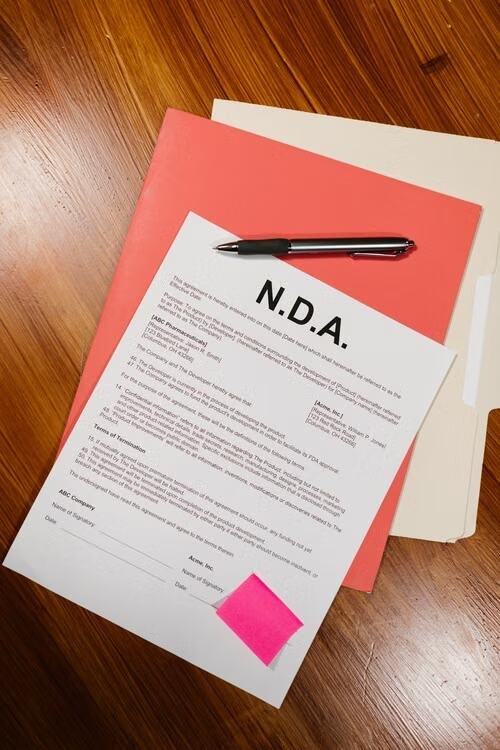
Confidential Information an NDA Can Protect
An NDA can cover both the technical and commercial sides of a hardware business, though whether specific information actually falls within that protection always comes down to how the agreement defines its scope.
Product Designs, Engineering Files, and Technical Data

The technical materials that define a hardware product typically need the most protection, and an NDA can cover all of them:
-
CAD files and engineering drawings
-
Product specifications and dimensional details
-
PCB layouts, circuit schematics, and technical documentation
-
Prototype test results, development measurements, and performance data
-
Firmware or embedded software materials, where applicable
The agreement protects these materials only when they fall within its defined scope. That means if the definition of confidential information is too vague to capture a specific category of material, or the agreement never addressed that category when drafted, coverage for it may not hold.
Manufacturing Processes and Trade Secrets
An NDA can also cover the manufacturing knowledge behind the product itself. Confidential information and a legally recognized trade secret are not the same category, and the difference matters. According to WIPO, a trade secret must derive economic value from not being publicly known and the owner must take reasonable steps to maintain that secrecy. Trade secret theft costs the U.S. an estimated $300 billion annually, which is why protecting manufacturing knowledge requires more than a single contract.
An NDA can cover non-public production methods, material specifications, process steps, and any technique that gives your business a commercial advantage.
Business Information, Pricing, and Supplier Terms
Non-technical business information is just as sensitive and exposed during negotiations with manufacturers and suppliers:
-
Manufacturing quotations and negotiated unit prices
-
Supplier terms and private commercial agreements
-
Product launch timelines and production schedules
-
Private customer, sales, or financial information
Restricting How Shared Information Is Used
Confidentiality and restrictions on use are two separate obligations, and a non-disclosure agreement (NDA) can cover both. When a manufacturer receives your CAD files to prepare a quotation, that does not automatically prevent the manufacturer from using those files for another project or sharing them with a subcontractor. The agreement must clearly state how the manufacturer can use the information and what uses are prohibited.
Limits of NDA Protection for Ideas, Inventions, and Product Designs
A non-disclosure agreement is not a complete protection strategy. Hardware startups that rely on an NDA alone can face serious problems.
| What an NDA Can Do | What an NDA Cannot Do |
|---|---|
| Protect confidential information defined in the agreement | Protect information that is already publicly available |
| Restrict how the receiving party uses shared files | Determine ownership of new work created during the project |
| Provide a legal basis for seeking remedies after a breach | Guarantee that unauthorized disclosure will never happen |
| Limit access to specifically authorized recipients | Automatically bind third-party subcontractors |
| Support trade secret protection efforts | Replace patents, copyright, or registered design rights |
An NDA Does Not Automatically Establish IP Ownership
A confidentiality agreement does not determine who owns an invention, design, or other work created during a project. This is one of the most common misunderstandings about NDAs.
Consider this example: a startup hires a product designer to develop an enclosure. The designer creates an original enclosure design during the project. The NDA does not determine who owns that design. Instead, applicable law and the terms of a separate agreement, such as a product development contract or IP assignment, determine ownership.
Public Information and Independently Developed Work
An NDA cannot make genuinely public information confidential simply by including it in the agreement. For example, if your product specifications appeared in a patent filing or press release before you signed the agreement, that information is already public. The NDA cannot make it confidential again.
Most non-disclosure agreements also include standard exclusions for:
-
Information the receiving party already possessed before signing the agreement
-
Information developed independently without using any protected material
-
Information received lawfully from a third party with no confidentiality obligation
Whether a specific exclusion applies depends on the wording of the agreement, the actual facts, and the relevant law.
An NDA Cannot Guarantee That Information Will Never Be Disclosed
An NDA creates a legal obligation, but it cannot make a breach impossible. If a breach happens, the agreement gives you a legal basis to seek remedies. However, it cannot recover information that the other party has already shared with others. Enforcement depends on the evidence available, the jurisdiction that governs the agreement, and the remedy you can realistically obtain by the time you discover the problem.
An NDA Does Not Automatically Bind Every Third Party
An agreement between a startup and its manufacturer does not automatically cover every subcontractor, consultant, or supplier the manufacturer brings into the project. If those third parties will access the startup’s confidential information, the agreement must address that access directly. This may involve a separate NDA, a confidentiality clause in the manufacturer’s subcontracting terms, or another arrangement that fits the project.
Confidentiality Is Not a Substitute for Every Form of IP Protection
An NDA protects secrecy, while patents, copyright, registered designs, and trademarks protect intellectual property rights. A startup that relies only on a confidentiality agreement may have limited remedies if someone copies its product, since different IP rights have different requirements and not all protection depends on registration. Qualifying trade secrets, for example, may be protected without registration if the owner takes reasonable steps to maintain their secrecy.
NDA Clauses That Define the Scope of Confidentiality Protection
Understanding what an NDA can and cannot do is important, but the actual protection your agreement provides depends on the specific wording of its clauses.
| Clause | What It Does |
|---|---|
| Definition of Confidential Information | Identifies exactly what information the agreement covers |
| Permitted Purpose and Limits on Use | Defines what the receiving party may do with the information |
| Authorized Recipients and Disclosure Exceptions | Specifies who may access the information and when disclosure is permitted |
| Confidentiality Period and Return of Information | States how long the obligations last and what happens to the information afterward |
| Breach, Remedies, and Ownership of New Work | Establishes the consequences of violations and clarifies ownership of project outputs |
Definition of Confidential Information
This clause forms the foundation of the entire agreement. If the definition is too broad, courts may refuse to enforce it. If it is too narrow, critical materials may fall completely outside its scope. A clear definition should cover:
-
Written documents and electronic files.
-
Oral disclosures made during meetings or presentations.
-
Whether you must mark information as confidential when you disclose it, or whether certain types of information are automatically confidential because of their nature.
A definition that identifies specific categories, such as technical specifications, process documentation, and pricing data, is much more enforceable than a general statement covering all proprietary information.
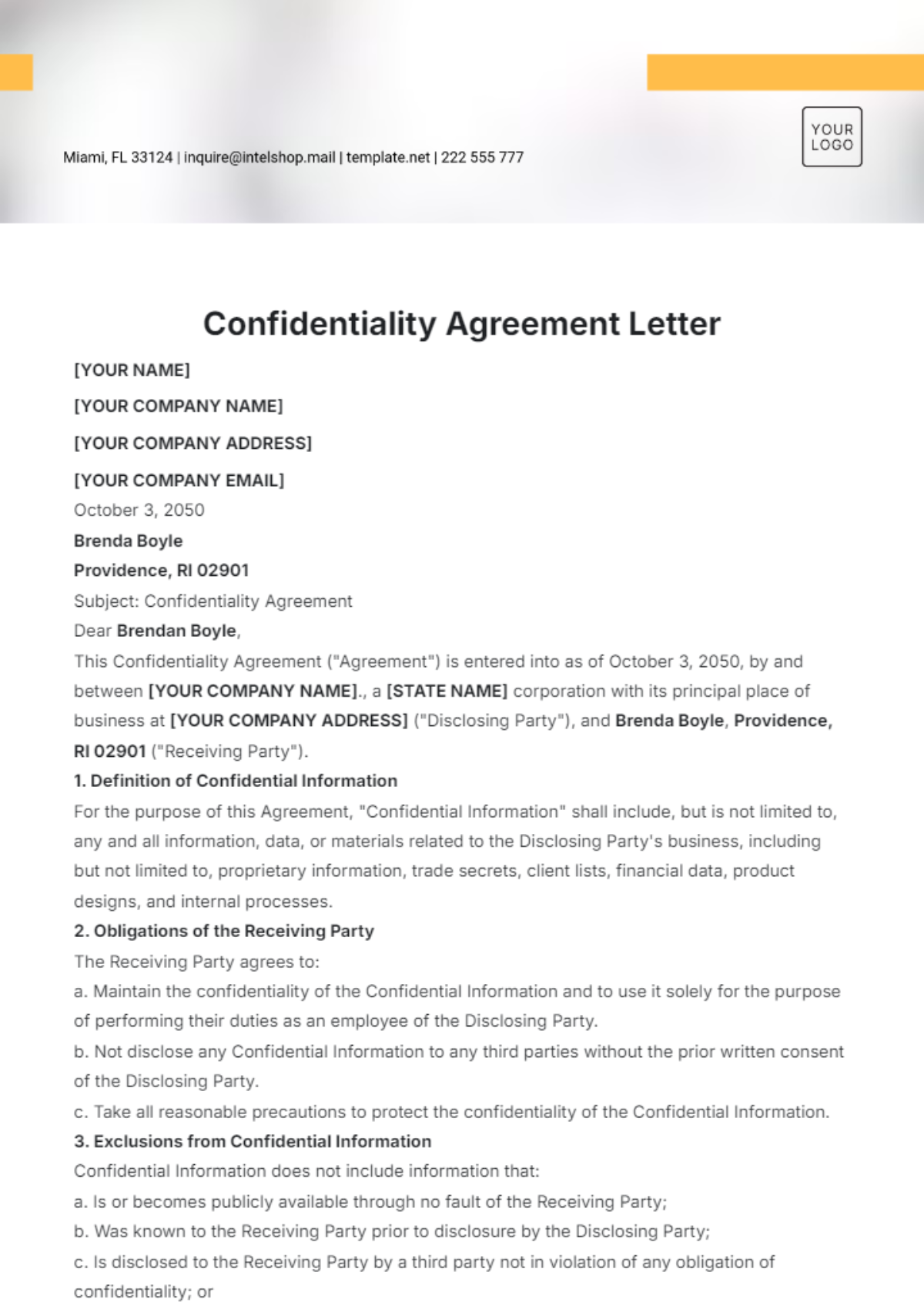
Permitted Purpose and Limits on Use
This clause defines what the receiving party may do with the information, separately from whether they may disclose it. Allowing a manufacturer to review design files to prepare a quote does not automatically allow them to manufacture prototypes from those files, share them with suppliers, or use them for a different project.
Authorized Recipients and Disclosure Exceptions
Standard clauses limit access to employees who need the information for the stated purpose, professional advisers, and specifically named subcontractors. The clause should also cover legally required disclosures and require the receiving party to notify the disclosing party in advance before sharing the information, where the law permits.
Confidentiality Period and Return or Destruction of Information
The agreement must state how long the confidentiality obligation lasts and what happens to the information when the relationship ends. The clause should cover:
-
How long the obligation lasts after the agreement ends
-
Whether digital copies, backups, and exported files must also be returned or deleted
-
What written confirmation the disclosing party receives after the materials have been destroyed
Trade-secret information may require indefinite protection. Leaving the duration undefined can lead to disputes over enforcement.
Breach, Remedies, and Ownership of New Work
The agreement should state what remedies are available if someone violates the NDA. Standard options include damages, injunctive relief to stop ongoing unauthorized use, and recovery of legal costs, depending on what the applicable law allows and what the disclosing party can prove. In practical terms, a party may seek injunctive relief to stop ongoing unauthorized use or disclosure, subject to the applicable law, the available evidence, and the court’s decision, while damages may compensate the disclosing party for the financial loss caused by the breach.
The agreement should also cover ownership of new work created during the engagement. A development agreement or IP assignment should address this issue instead of leaving ownership as an assumption under the NDA.
Protecting Hardware Designs With NDAs and Complementary IP Safeguards
An NDA is one part of a broader protection strategy. The decisions you make before sharing information determine how well that protection works in practice.
Identify What Needs Protection Before Sharing Files
Before sending any file, identify the sensitive information in the package and decide what the other party actually needs to do the job. For example, a manufacturer evaluating an enclosure design needs specific mechanical drawings and dimensional requirements.
Match the NDA to the Manufacturing Relationship
An early feasibility discussion involves different risks and information from a full production contract. When new types of information become relevant, review the existing agreement to confirm that it still covers the new work. Assuming it does without checking can create gaps in protection during long-term manufacturing relationships.
Combine Contractual Protection With Appropriate IP Rights
An NDA protects confidential information. However, it does not protect a patentable invention if you never file a patent application, establish copyright ownership if you never assign those rights, or prevent copying in jurisdictions where the agreement has no legal force. When a manufacturer or contractor creates new engineering work, define ownership in a development agreement or IP assignment instead of assuming the NDA covers it.
Limit Access and Keep Confidentiality Practices Consistent
Your contractual terms work best when your information-handling practices support them:
-
Restrict access to people who genuinely need the information for the current task.
-
Mark sensitive documents as confidential where appropriate and practical.
-
Keep a clear record of what you shared, with whom, and when.
For cross-border manufacturing arrangements or high-value technology, seek legal advice before sharing information. Review the agreement, ownership provisions, and relevant jurisdictions together before work begins.
Protecting Product Designs Requires More Than an NDA
A non-disclosure agreement (NDA) can set confidentiality rules and restrict how people use the information it covers. However, the level of protection depends on the agreement’s terms, the facts of the situation, and the applicable law. Simply signing an NDA does not guarantee that the information will be protected.
Product developers who work with outside manufacturers, designers, or engineers often need additional contractual protections, intellectual property (IP) measures, and information-handling rules to address risks that confidentiality terms alone cannot resolve.
Once your NDA is in place and you understand what it covers, the next step is finding a manufacturer you can confidently share your product files with.
StartupMolding provides:
Contact StartupMolding to discuss an NDA before sharing your confidential product files.
Frequently Asked Questions
If you share information before signing an NDA, can the agreement protect it retroactively?
Not automatically. A non-disclosure agreement (NDA) generally covers information shared after both parties sign it. A signed NDA can expressly cover specified prior disclosures depending on its wording and governing law, but do not assume that earlier disclosures are automatically covered.
Can an NDA protect an idea that has not been developed into a design or working concept?
An NDA can protect a disclosed idea if you describe it clearly enough to fit the agreement’s definition of confidential information. A raw idea with no concrete form is difficult to protect through any legal mechanism.
Does an NDA protect product information when the manufacturer operates in a different country?
Not automatically. Enforcement depends on which jurisdiction governs the agreement. Cross-border arrangements require specific advice on governing law clauses and where the parties can enforce legal remedies.
What is the difference between an NDA and an invention assignment agreement?
An NDA controls who can share and use confidential information. An invention assignment agreement determines who owns the intellectual property created during a project. In hardware product development, both agreements are often necessary.
Can a manufacturer refuse to sign an NDA before a project discussion?
Some manufacturers have internal policies that limit the NDAs they will sign, or they may propose their own standard agreement. Negotiating the terms is different from refusing to accept any confidentiality obligation. What is acceptable depends on the information you need to share and your position in the relationship.